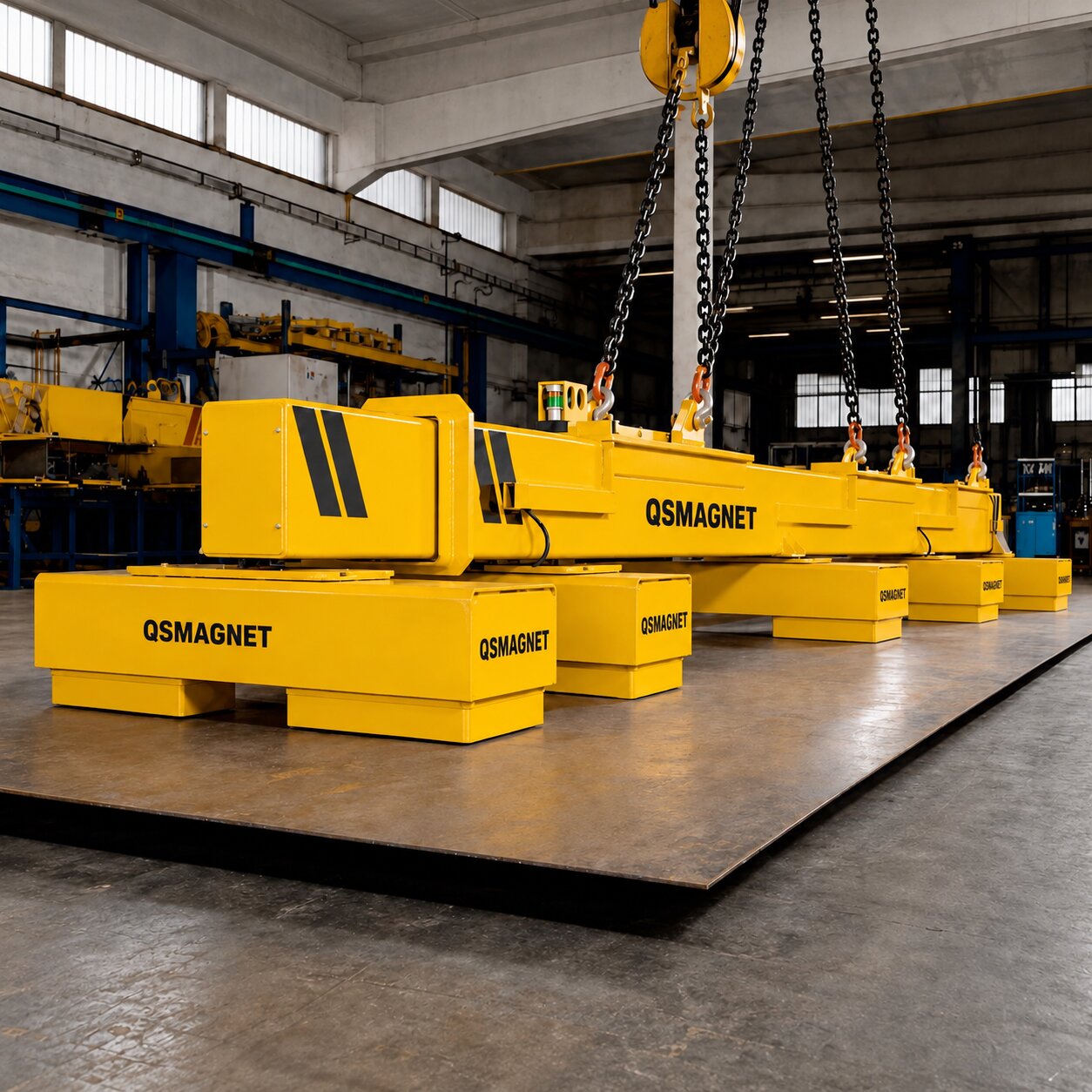
The load and the application are assessed together.
The conditions that drive selection.
01
Material and thickness
The magnetic properties of the material and the thickness of the part affect the holding force that can be achieved. The load type should be stated in the technical assessment.
02
Surface and contact
Paint, rust, roughness and air gaps change the contact conditions. The effective contact area of the gripper is reviewed.
03
Handling direction and flexing
Horizontal or vertical handling, the shape of the load and its flexing create different requirements. The placement of holding points is considered together.
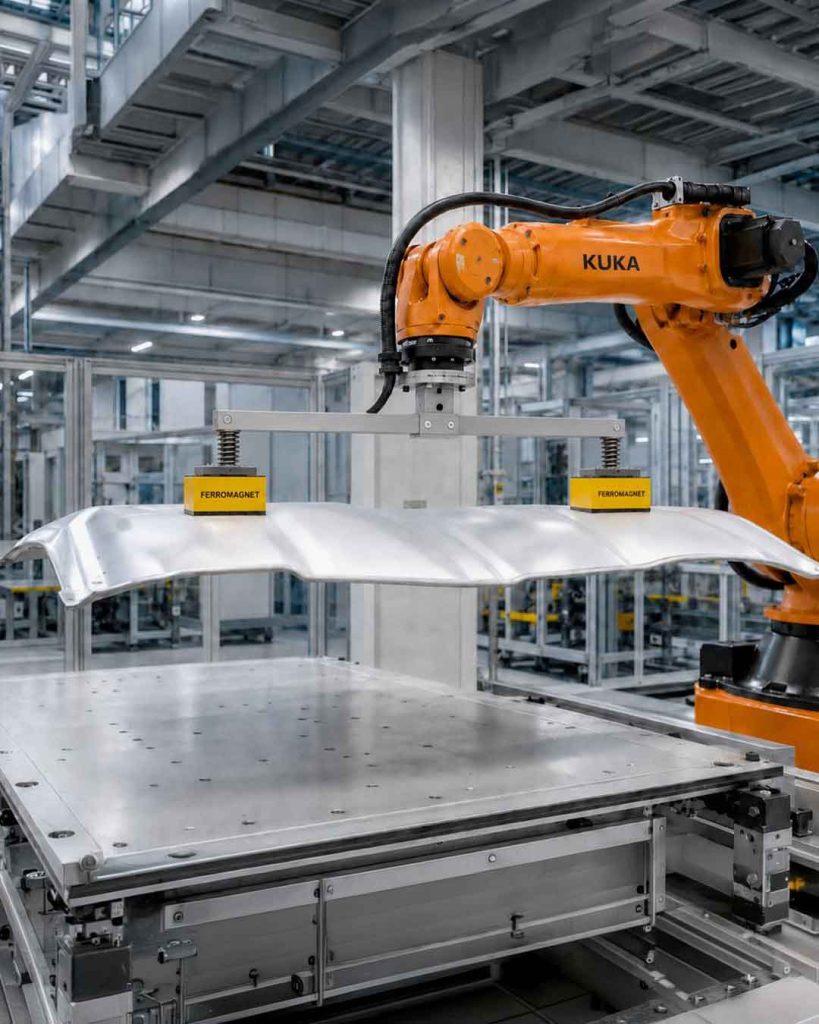
In automation, motion conditions are also part of the selection.
04
Temperature and motion
Load temperature, acceleration and the working cycle are assessed. In robot applications, the mass of the part and gripper is considered together with the motion.
Breakaway force is not working capacity.
Breakaway force measured in a test is not used directly as the load that can be carried. The permissible working load is set by the conditions and technical assessment of the selected system.
Breakaway force
The separation force under specific test conditions.
Working capacity
The limit set for defined conditions of use.
What should you share for a technical assessment?
This information helps define the system that suits your needs.
Paint, rust and mill scale can create an air gap between the magnet and the load and reduce effective holding force. When the surface condition is shared with a photo, the assessment takes it into account.
Yes. In vertical handling, the load acts parallel to the contact surface, so it is assessed differently from horizontal handling. Selection is based on the technical data of the relevant system.
Let's assess your load together.
Tell us about the part you need to move and how you work. We’ll define the right system together.