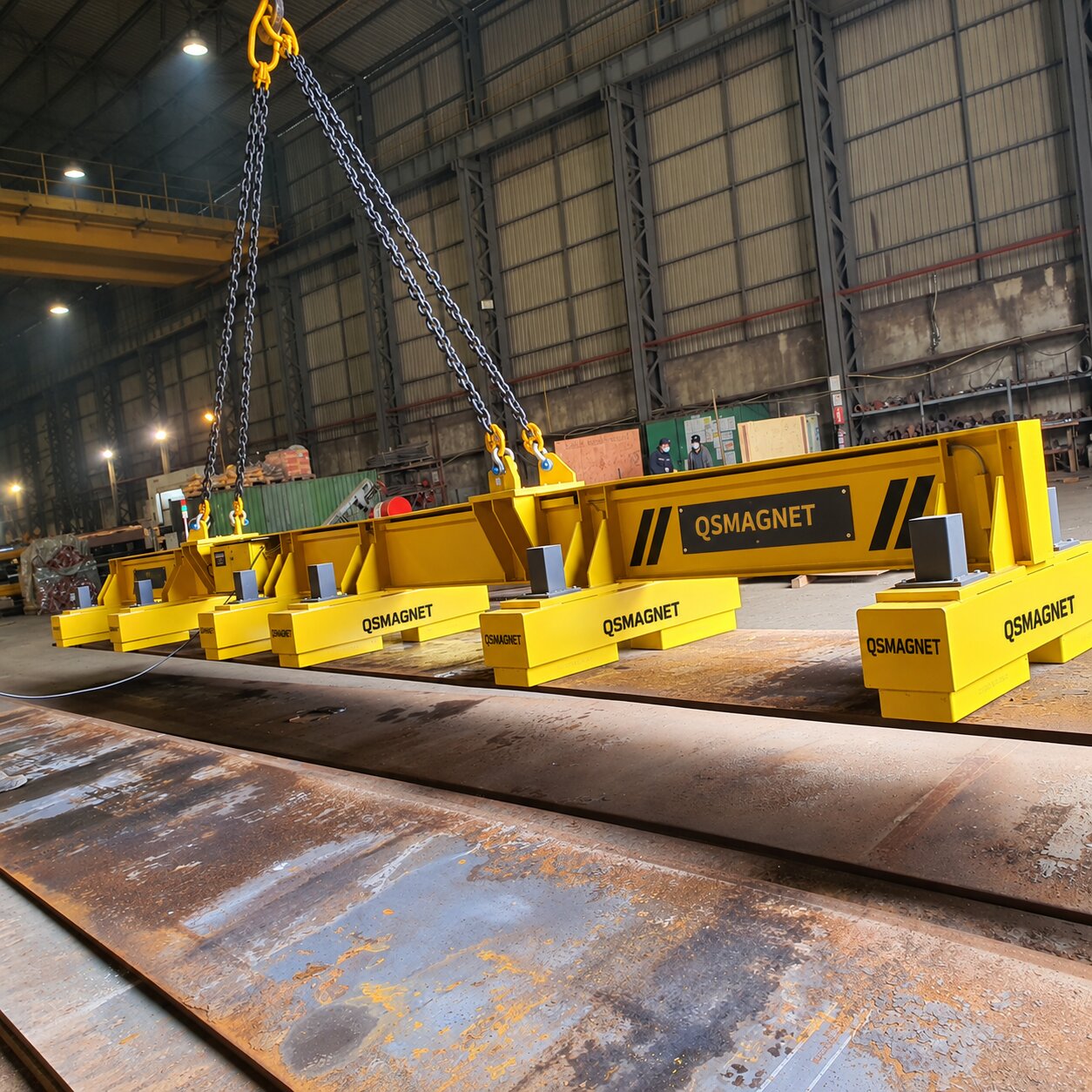
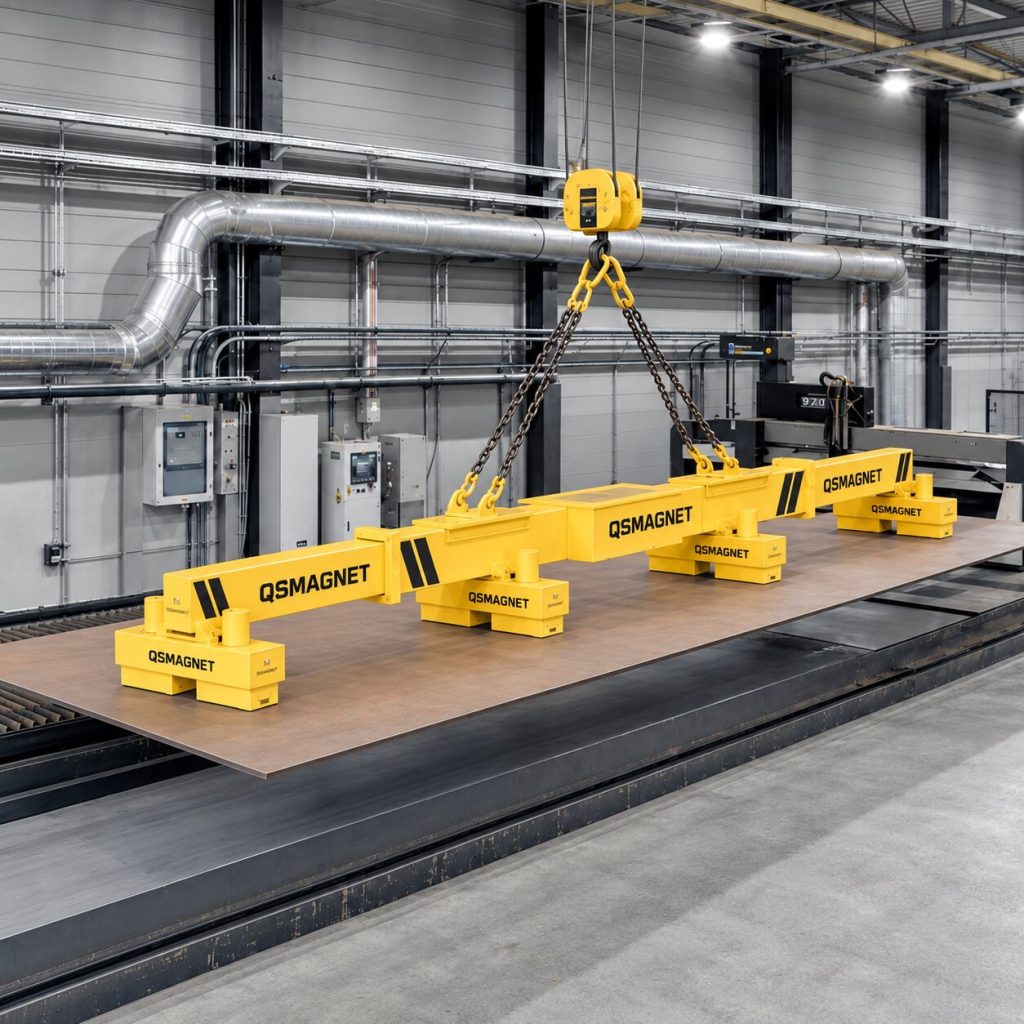
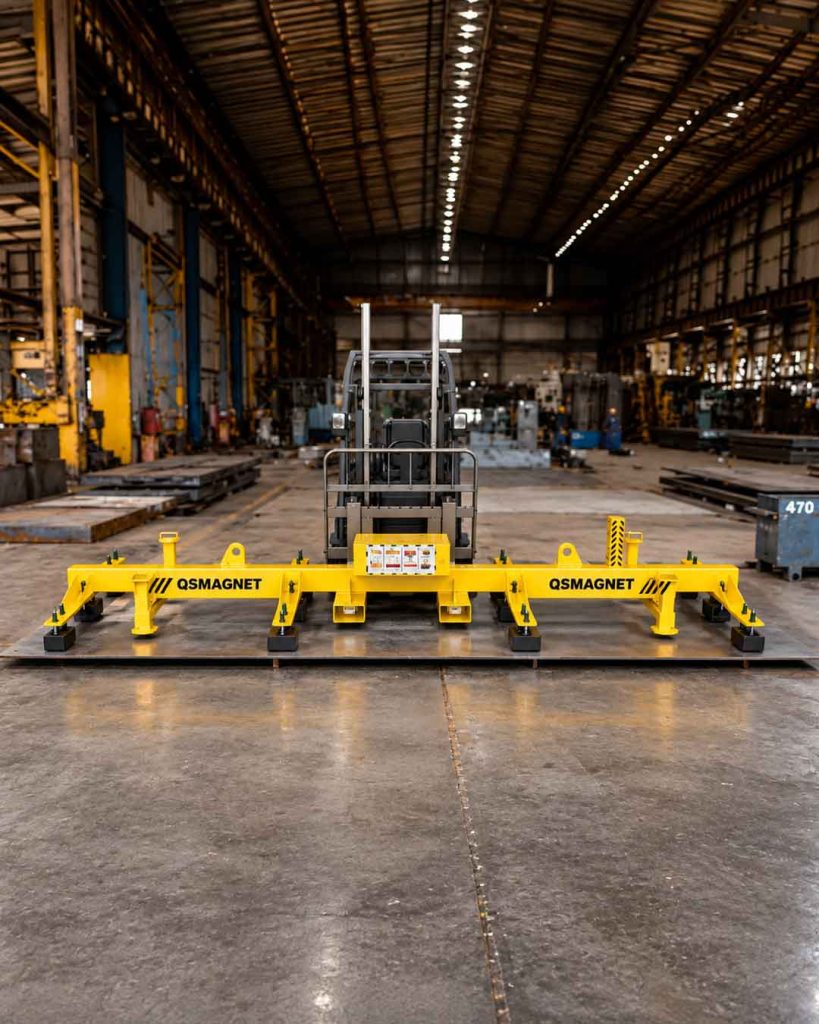
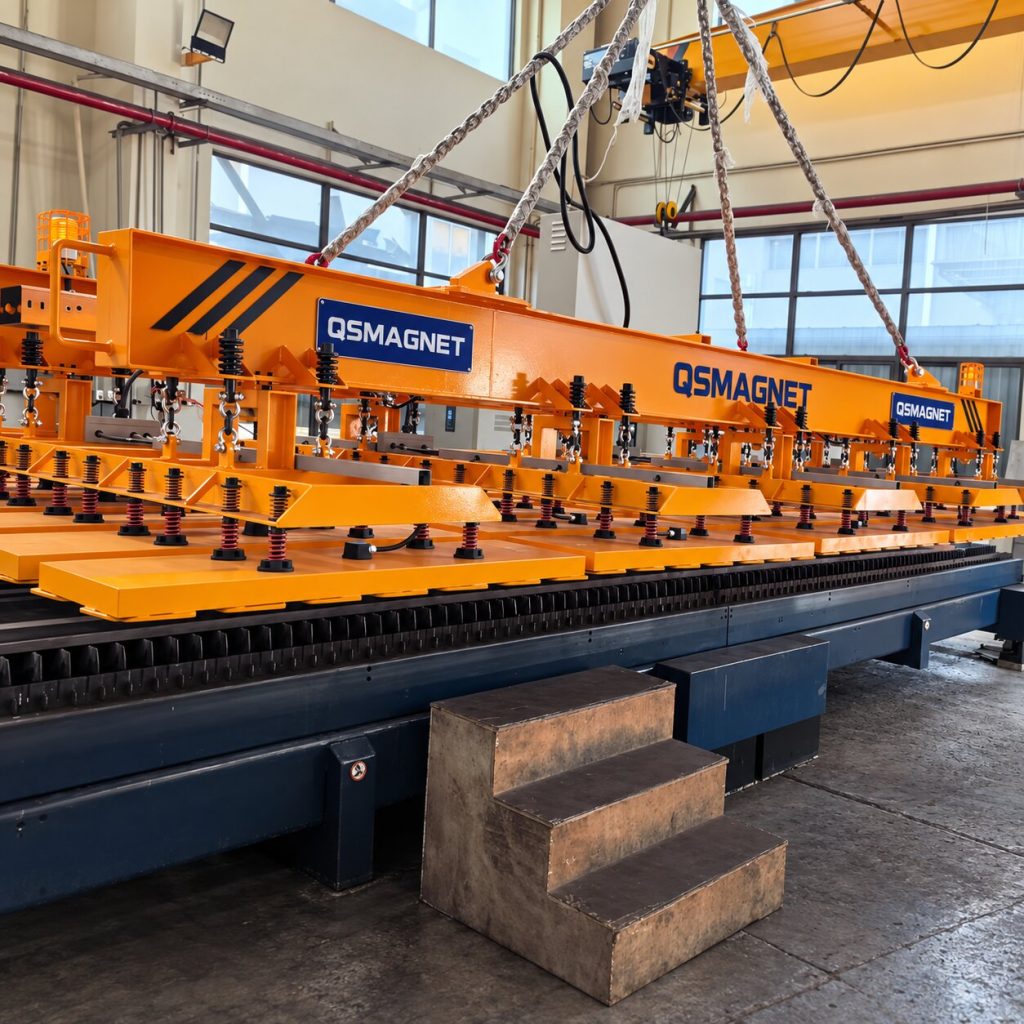
Magnetic lifting solutions for lifting steel sheets with a crane, moving them around the shop floor and loading them onto machines. Let’s define the system that suits your sheet dimensions and working method together.
Weight alone is not enough when choosing a sheet lifting device. Material type, sheet thickness, dimensions, contact surface and handling direction are assessed together.
Compare clamp, vacuum and magnetic methods against the conditions of your application.
For thin sheets, material, thickness, contact area and surface conditions are assessed together. The sheet flexing during lifting also affects where contact points are placed; suitability is determined for each application.
A lifter is not, on its own, a guaranteed sheet separation system. Picking single plates from a stack is assessed separately and tested according to material, thickness, surface and stacking conditions.
Sheet type and thickness, smallest and largest plate sizes, approximate weight, whether you move single plates or stacks, handling direction and your crane details are a good start. Adding a photo or drawing speeds up the assessment.
Tell us about your sheet and your process.
Share the dimensions, approximate weight and handling method. Let’s assess the right solution together.