
Coil and Profile
How Are Steel Coils Handled Eye-Horizontal and Eye-Vertical?
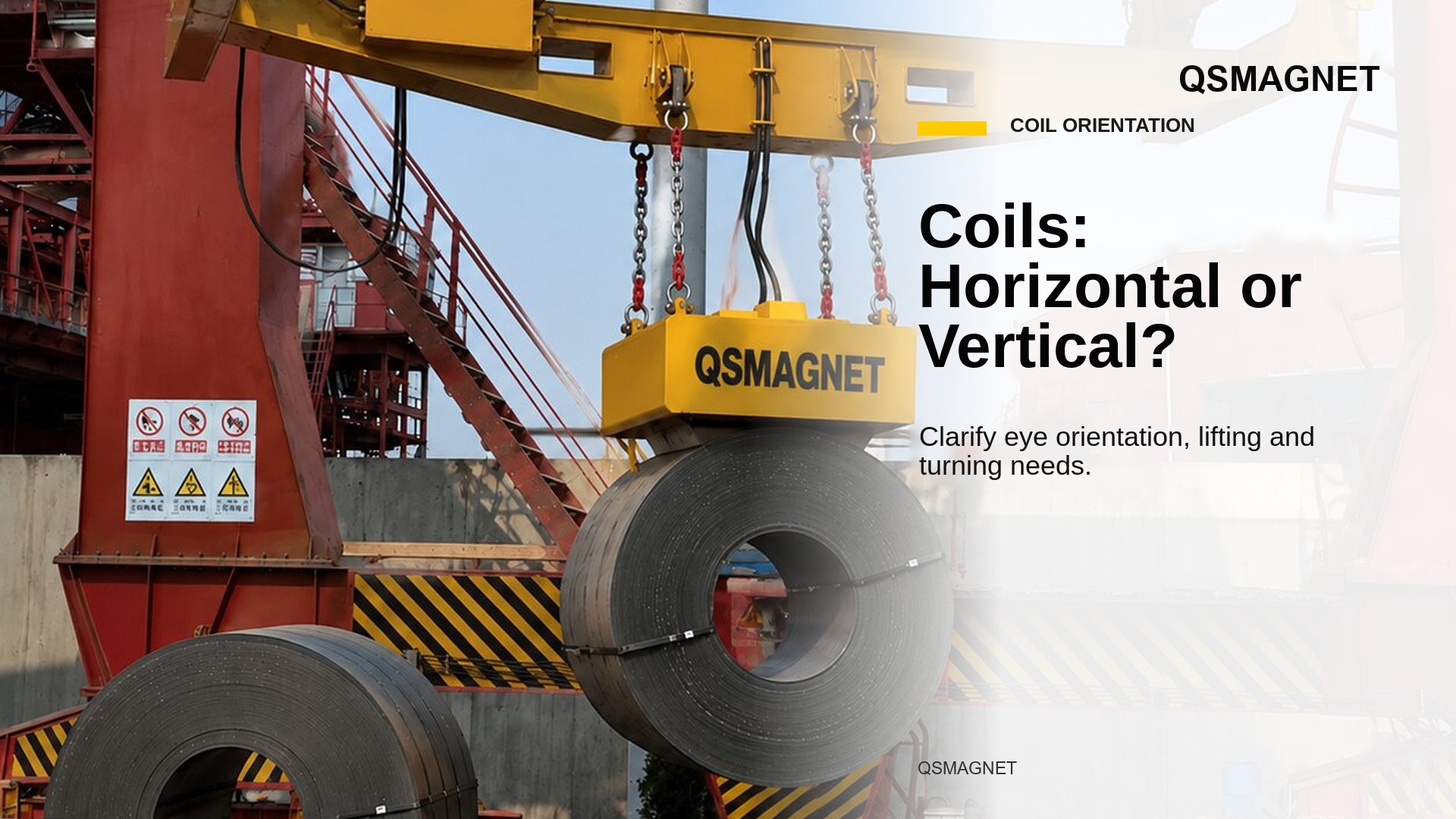
When discussing handling a steel coil horizontally or vertically, the eye orientation of the coil must be clarified first. An eye axis parallel or perpendicular to the floor requires different holding arrangements. A system’s ability to lift in one position does not mean it is suitable for the other.
To discuss the right option for your application, take a look at QSMAGNET magnetic lifting solutions. You can start the assessment with two photos showing the current position and the target position.
Describe the handling position clearly
Rather than writing only “the coil lies horizontally” in your quote request, state which way the eye faces. Show the cradle or pallet the coil sits on as well. This simple description ensures from the start of the discussion that everyone is talking about the same handling job. Also explain how the coil will be delivered to the next station. If there is a difference between the handling method that looks suitable in storage and the input position the production line needs, stating it at the start of the project discussion makes assessing the solution easier.
Lifting and turning are separate functions
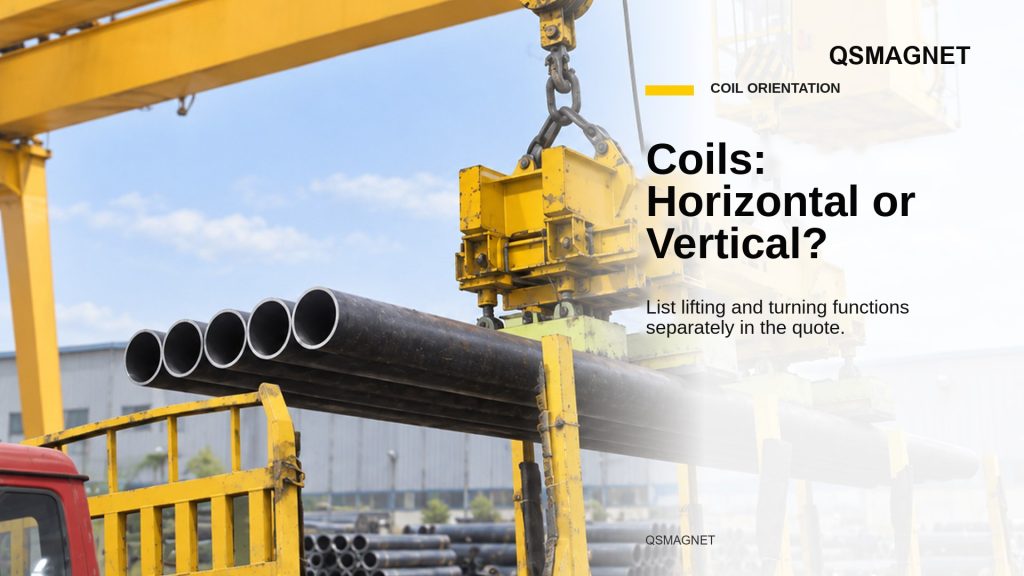
If the coil’s orientation will change during production, a suitable upending or turning arrangement is needed for that operation. Don’t try to change the load’s orientation by misusing a standard lifting device; the permitted movements of the system must be defined by the manufacturer.
Magnetic coil handling solutions also have separate designs for eye orientation and coil type. So a system that lifts flat sheet plates should not be considered directly adapted to a coil handling project.
Preparing for the project discussion
- Show the start and end positions on the same drawing or photo.
- Share the coil’s weight, diameters, width and details of the coiled material.
- Explain the operation required: handling, stacking, placing on the uncoiler or changing position.
Frequently asked questions
Can one device be used in both handling orientations?
Only if it has been designed and verified for both positions. The model’s technical scope and capacity information must be the basis.
What information should I add for coil turning?
Show the start and target orientation, the angle of change and the surrounding working area. State lifting and turning needs separately in your quote request.
Send the QSMAGNET team the current and target position of your coil. Let’s assess your magnetic handling needs together with the application conditions.
Related articles
All articles
Coil and Profile
How Are Bulb Flat (Holland) Profiles Handled with a Crane?
Handling bulb flat profiles? Assess length, cross-section and placement needs together and explore the…
Read article
Coil and Profile
How to Choose a Steel Coil Lifter: C-Hooks, Coil Tongs and Magnetic Systems
Which dimensions decide between C-hooks, coil tongs and magnetic systems for steel coils? Assess…
Read article
Handling Methods
Clamp, Vacuum or Magnet? Which Is Right for Handling Steel Sheet?
Compare plate clamps, vacuum lifters and magnetic lifters for sheet handling by material, surface…
Read article