
Coil and Profile
How Are Bulb Flat (Holland) Profiles Handled with a Crane?
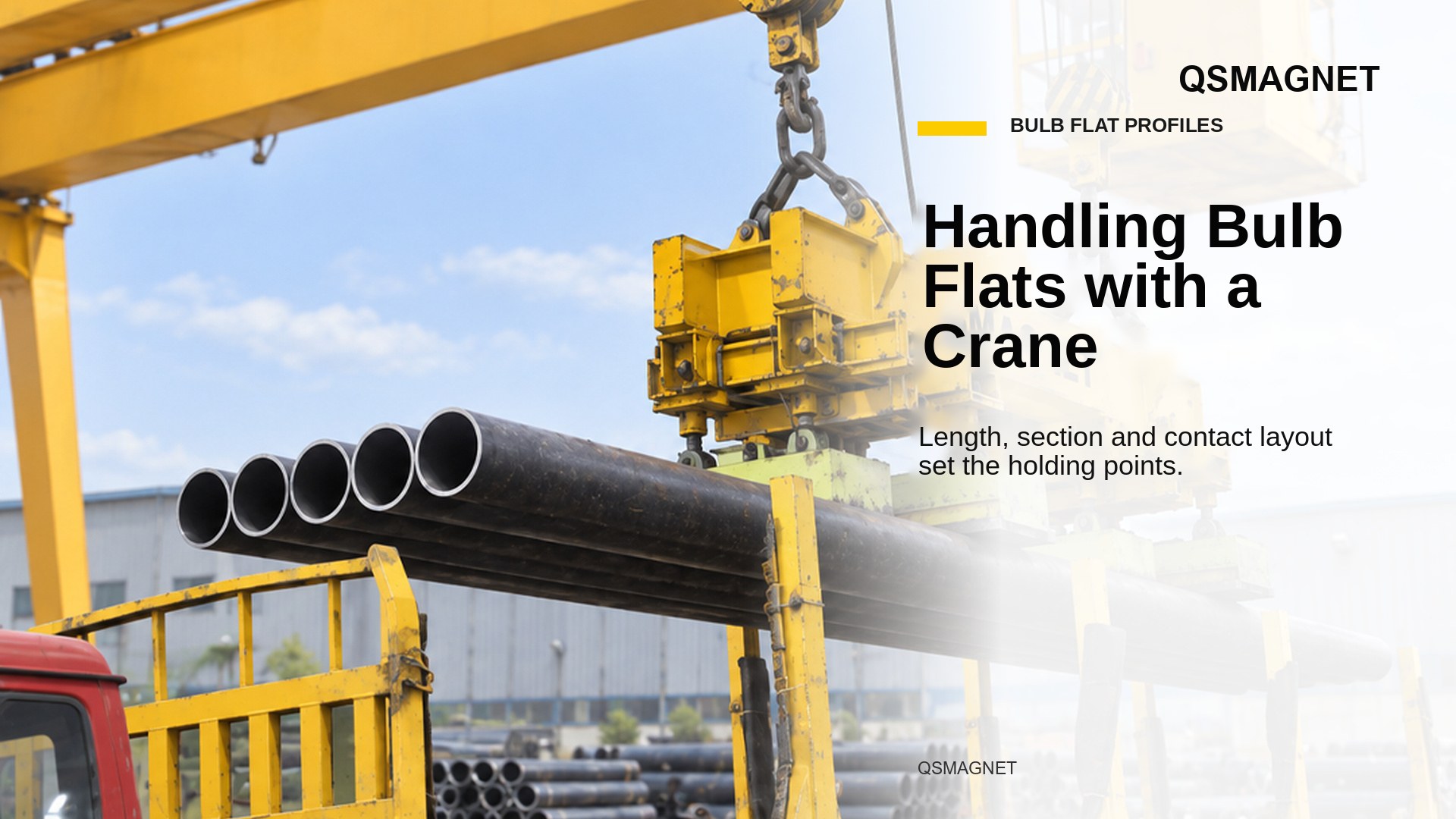
When handling bulb flat (Holland) profiles, the right lifting layout depends on the profile’s length, cross-section, weight and where it will be set down. Assessing a long profile only by its total tonnage can overlook the holding points and how the load behaves.
If you handle these parts often in your shipyard, take a look at the QSMAGNET bulb flat lifting system. We can assess a solution specific to profile handling together with your current handling setup.
A suitable contact layout for the profile
In magnetic lifting, the accessible contact surface of the profile affects module placement. When the length changes, support points and load distribution are reassessed as well. The suitability of a device chosen for sheet plate must be verified separately for a profile with a different cross-section.
- Prepare the profile’s section drawing, length range and material details.
- State clearly whether single profiles or a specific group will be handled.
- Share photos of the pick-up and drop-off points together with your crane details.
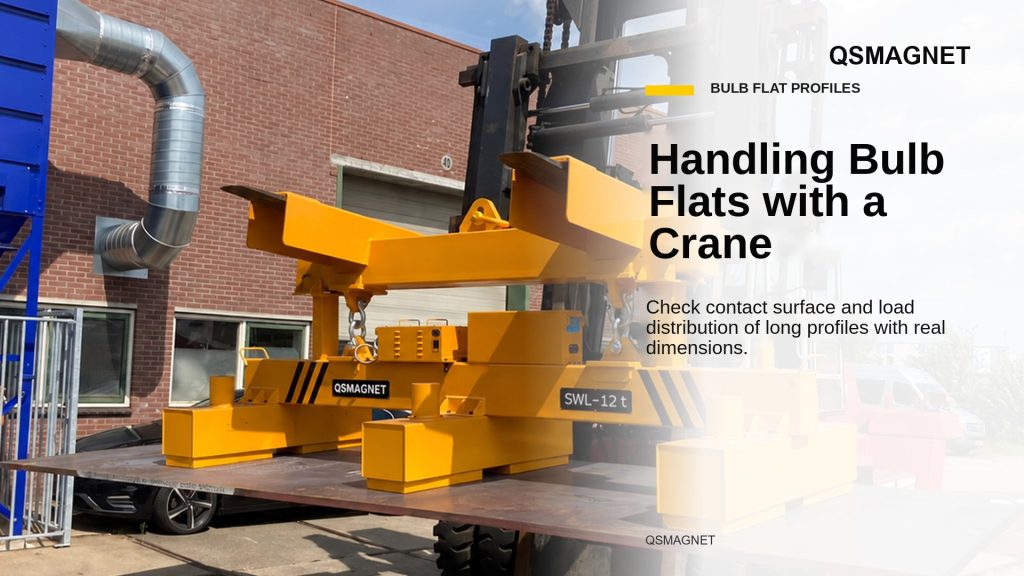
Plan the last step of handling too
For example, if a profile taken from stock is to be moved to a cutting machine, show the approach area to the machine in the quote discussion. For a profile going to the assembly area, describe the target position and placement requirement. Moving the same part to different stations can create different expectations in the project.
With this information, you can describe your workflow to QSMAGNET rather than just asking about a lifter model. Basing the assessment on the real profile, your existing crane and your production layout gives a more meaningful quote comparison. Bring shorter and longer examples to the discussion as well as your most commonly used profile. That makes the working range you expect from the system clear from the start, and lets you address future production needs in the same discussion.
Frequently asked questions
Can several profiles be handled at the same time?
This requires a layout designed and verified for that operation. The capacity for single-profile handling must not be interpreted as approval for group handling.
Is the profile weight alone enough for a quote?
The length and section drawing should be shared too. Photos showing how the part is stacked and where it will be set down also make the assessment easier.
Share your profile drawing and a photo of your current handling setup with the QSMAGNET team. Let’s assess the right magnetic lifting solution for bulb flat profiles together.
Related articles
All articles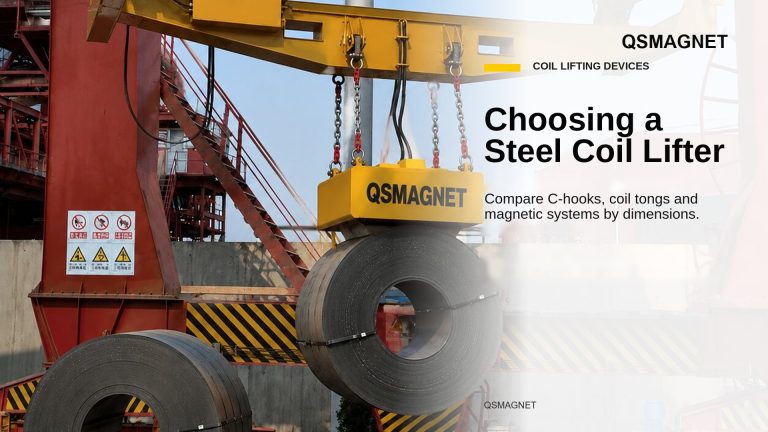
Coil and Profile
How to Choose a Steel Coil Lifter: C-Hooks, Coil Tongs and Magnetic Systems
Which dimensions decide between C-hooks, coil tongs and magnetic systems for steel coils? Assess…
Read article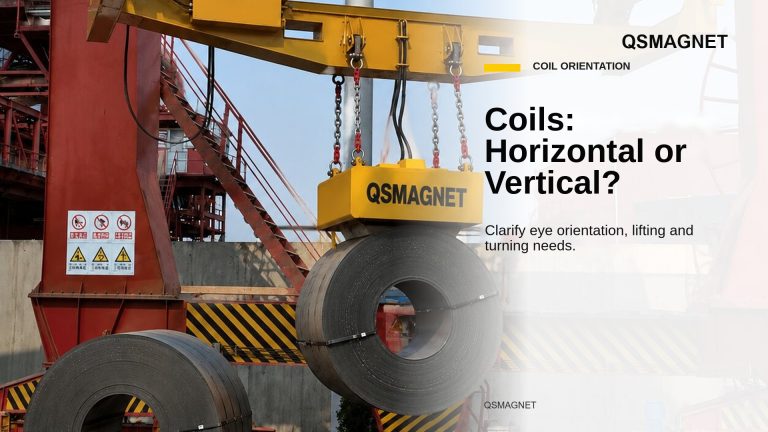
Coil and Profile
How Are Steel Coils Handled Eye-Horizontal and Eye-Vertical?
Separate eye orientation, lifting and turning needs for steel coils. Assess the application information…
Read article
Handling Methods
Clamp, Vacuum or Magnet? Which Is Right for Handling Steel Sheet?
Compare plate clamps, vacuum lifters and magnetic lifters for sheet handling by material, surface…
Read article