
Sheet Handling
How Are Steel Plates Handled Vertically and Horizontally?
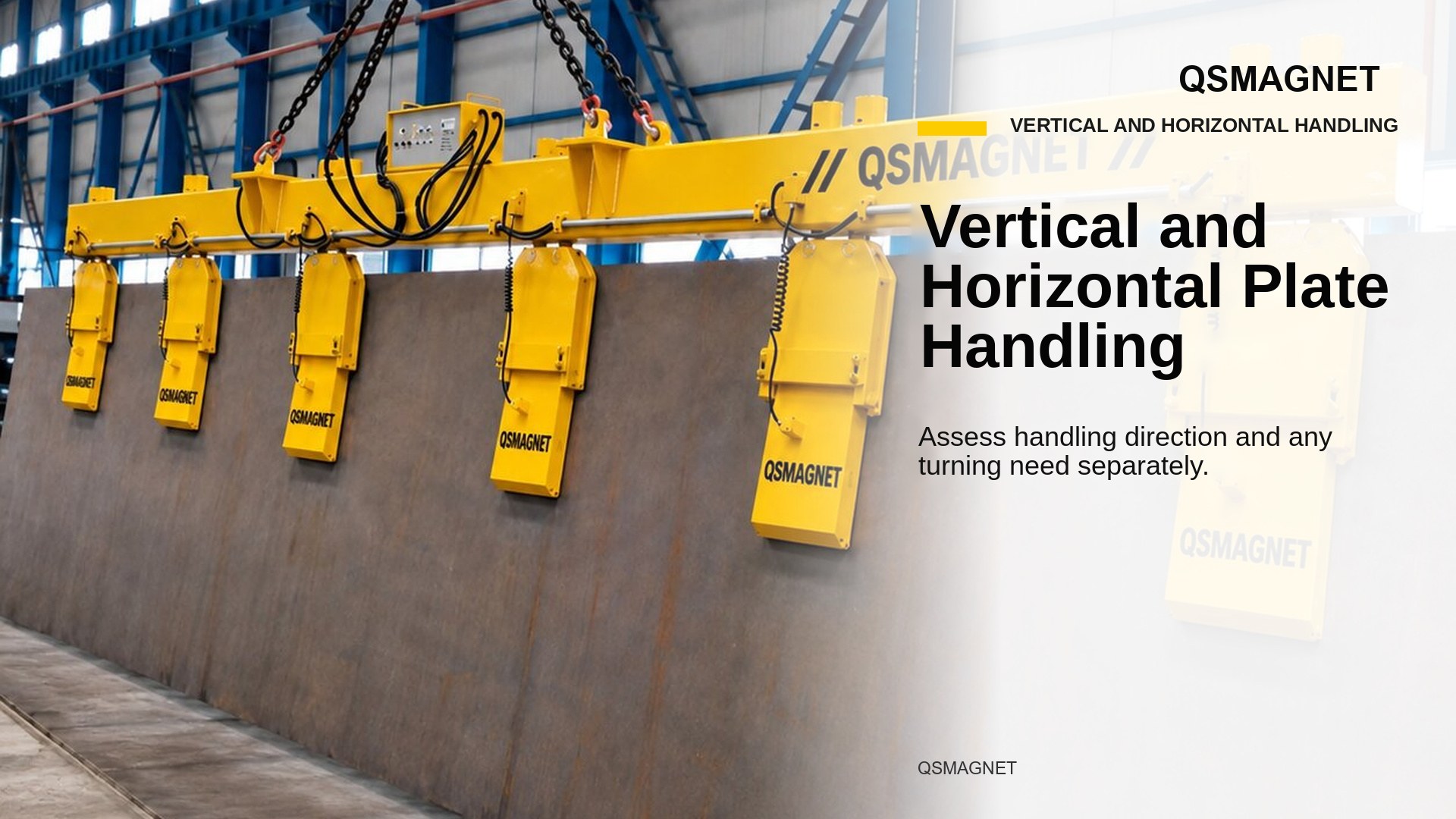
To handle a steel plate vertically or horizontally, the system must be chosen for the direction of use and the material; horizontal capacity is not automatically valid for vertical operation. For jobs that involve both positions, you can assess the QSMAGNET vertical/horizontal magnetic lifting system.
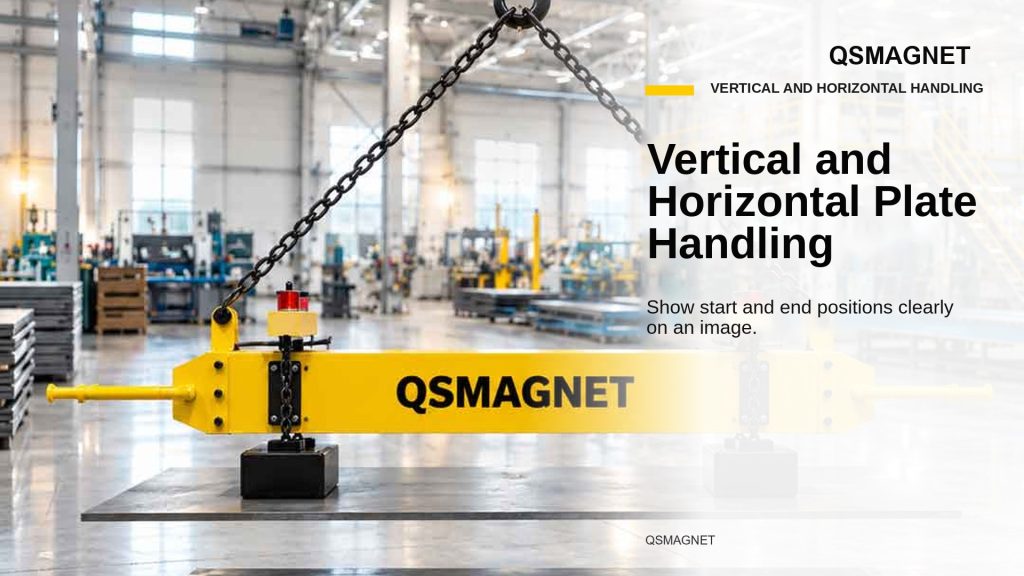
Show the start and end positions
Saying “we will move the sheet upright” is an important start, but it is not a full description. How does the plate sit in the stack, and in which orientation will it be placed on the machine? Mark the start and end positions on a photo. If the orientation needs to change along the way, state that separately.
Don’t treat a vertical/horizontal handling feature as the same as an automatic turning function. Have any need to change orientation written into the quote as a separate item, not just the positions to be handled. That leaves no ambiguity between the product name and the movement you expect.
Ask about capacity together with the working direction
When the direction of the load changes, the effect of the forces on the holding surface changes too. Manufacturer documents may define separate equipment and working load limits for vertical operation. Use the approved configuration of your own unit; don’t use the values of a different product.
- Prepare the width, length, thickness, weight and material details of the sheet.
- State the pick-up and drop-off orientations and any request to change orientation.
- Share layout photos, the available headroom and your crane details.
QSMAGNET’s vertical/horizontal product group includes remote control and application-specific manufacturing options. During the assessment, list which sheets will be handled in each direction separately; don’t let the need in one direction be assumed to cover the other.
If there are different layouts between storage and the production area in particular, share an example workflow. Seeing the movements covered by the quote and the operations excluded from it ensures that your daily expectations and the selected system describe the same job.
Frequently asked questions
Can I turn a horizontal lifting unit on its side and use it?
Don’t make such an adaptation without the manufacturer’s approval for vertical use and the appropriate configuration.
Can a single system be assessed for both positions?
That is the aim of QSMAGNET’s relevant product group; the material range and the capacity in each direction must be verified for the project.
Send QSMAGNET photos of where the sheet is picked up and set down. Let’s define the scope and capacity conditions of a magnetic system suited to your vertical/horizontal handling needs together.
Related articles
All articles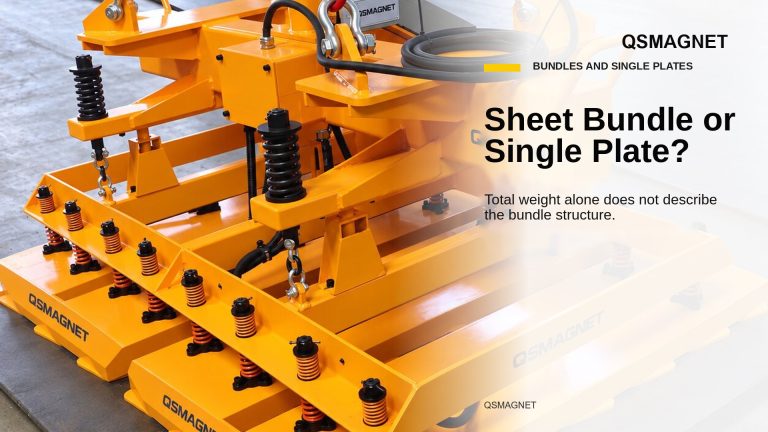
Sheet Handling
What Is the Difference Between Moving a Sheet Bundle and Lifting a Single Plate?
Why are moving a sheet bundle and lifting a single plate different? Assess the…
Read article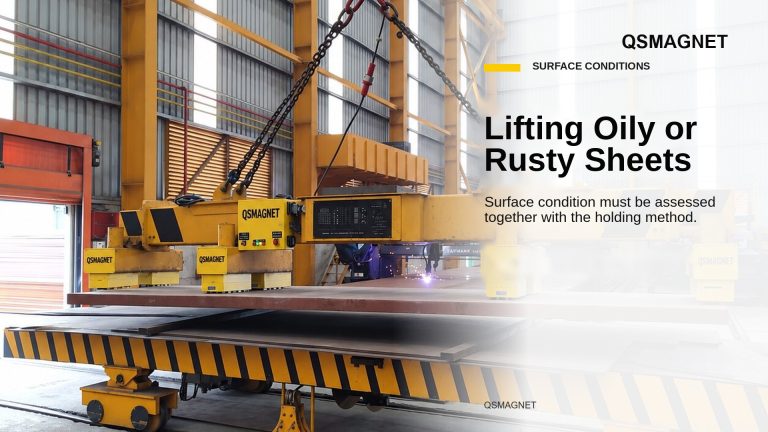
Sheet Handling
How to Lift Oily or Rusty Sheets
Assess the gripping surface correctly on oily or rusty sheets. Learn how surface conditions…
Read article
Sheet Handling
How to Reduce Scratches and Surface Marks When Handling Sheet
To reduce scratches and surface marks when handling sheet, define the contact points and…
Read article