
Sheet Handling
Why Do Large, Long Steel Plates Sag When Lifted?
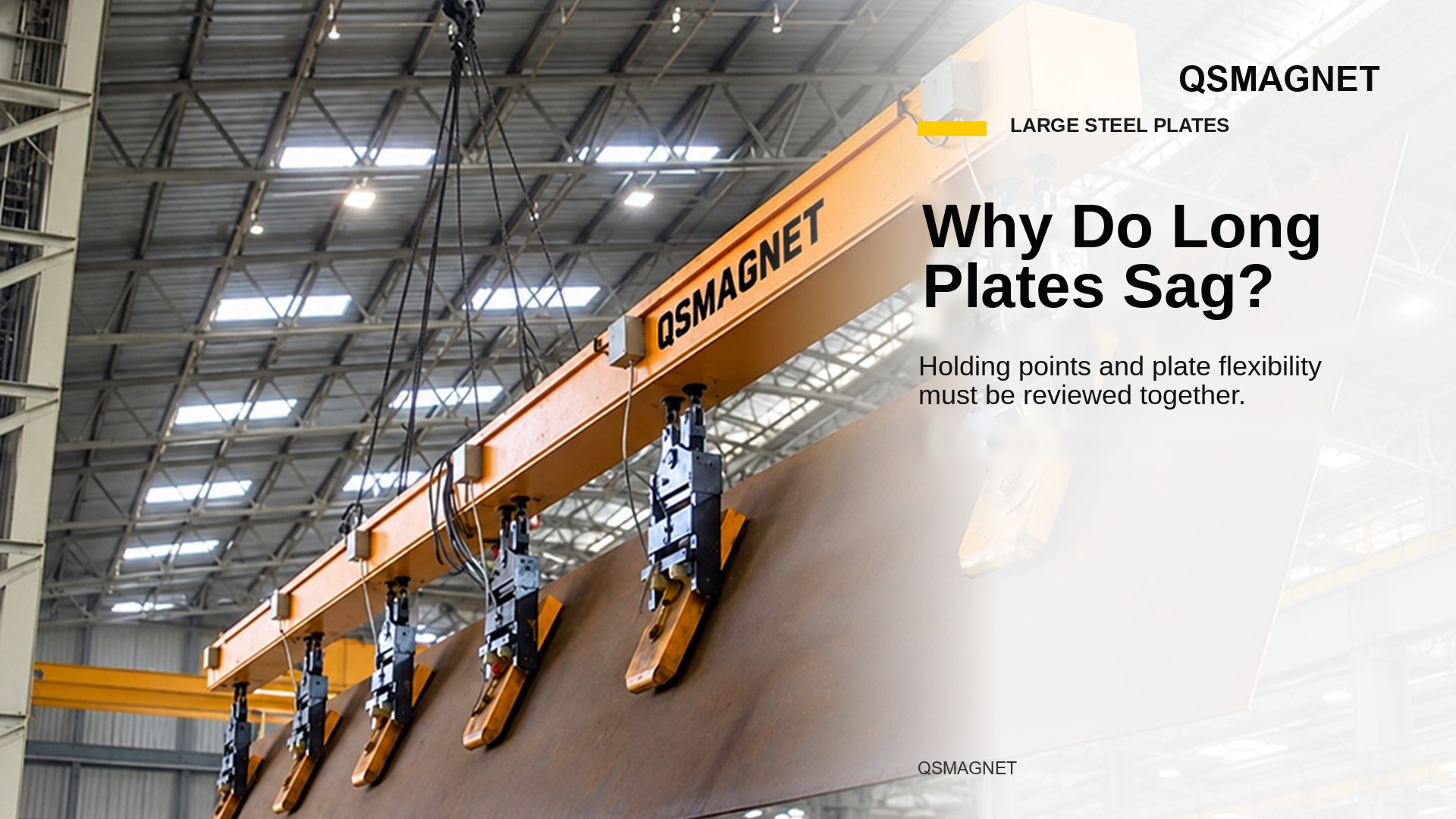
On large, long sheets, the flexible sections outside the holding points can sag under their own weight. In magnetic lifting, this bending can increase the tendency of the surface to peel away from the gripper, so looking at lifting tonnage alone is not enough.
For different plate sizes, take a look at the QSMAGNET telescopic magnetic sheet lifting system.
Is a stronger gripper enough on its own?
If the holding area stays the same while the sheet gets longer and wider, the unsupported sections of the plate become more important. That is why manufacturer documentation states permitted size and thickness conditions alongside capacity. Flexible loads may need more than one gripper and a suitable lifting beam.
Don’t treat a short, thick plate and a long, thin plate of the same weight as the same handling case. Rather than sharing only the heaviest part for a quote, list the longest and thinnest plates on separate lines as well.
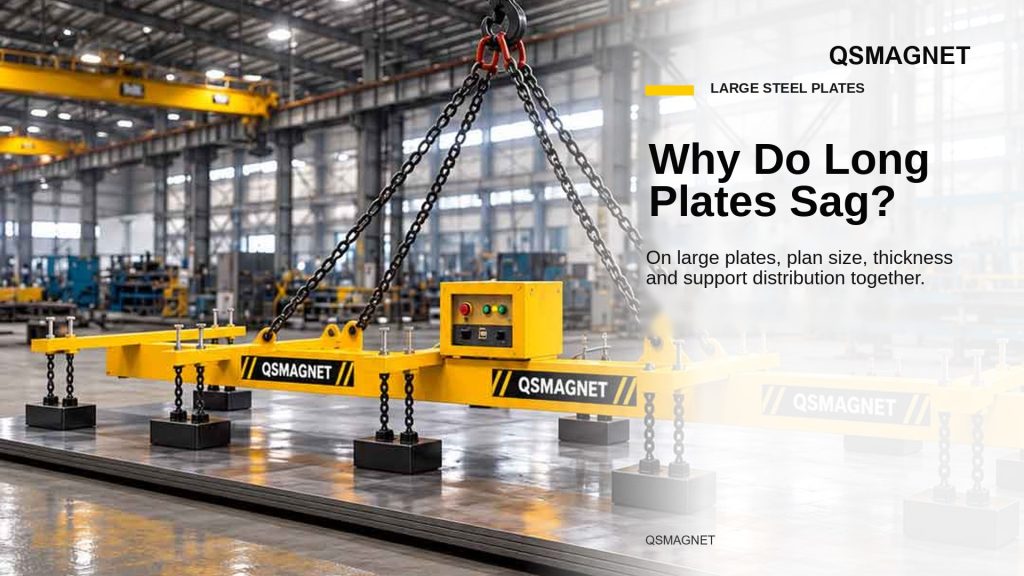
How the distribution of holding points is assessed
Arranging the distance between magnetic modules to suit the plate length matters for load distribution and for limiting sag. The number and position of modules are set by the range of plates to be handled; there is no single spacing that works for every sheet.
- Size range: The shortest and longest plates and the variation in width.
- Thickness range: Especially the thinnest sheet handled in large sizes.
- Layout: The space available for the stack, the destination table and the lifting beam.
If your production list includes different sizes, don’t reduce them to one representative part. Share how often each size is handled, too. Then the need for adjustment, the working area and daily use can be covered in the same discussion.
In the acceptance discussion, don’t focus only on the load leaving the ground. Ask how the holding layout and handling conditions will be verified across the defined plate range, and carry out the assessment together with the manufacturer’s documentation.
Frequently asked questions
Is it right to fix sagging by supporting the plate by hand?
No. Sagging calls for a review of the holding layout; people must be kept out of the danger zone of a suspended load.
Does a telescopic design suit every plate?
Not on its own. The plate sizes to be handled and the module positions must be verified for the application.
Send QSMAGNET the dimensions of your longest and thinnest sheets, and we will assess the right magnetic holding layout together.
Related articles
All articles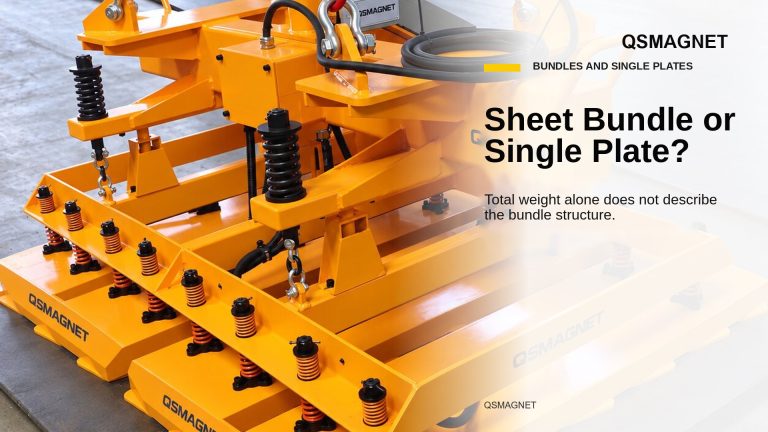
Sheet Handling
What Is the Difference Between Moving a Sheet Bundle and Lifting a Single Plate?
Why are moving a sheet bundle and lifting a single plate different? Assess the…
Read article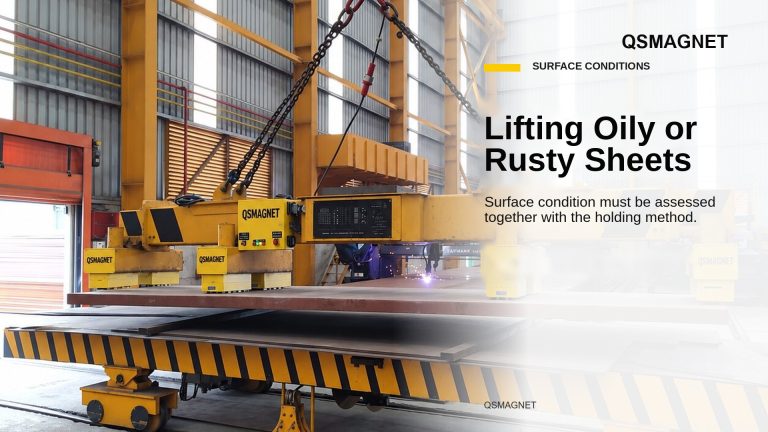
Sheet Handling
How to Lift Oily or Rusty Sheets
Assess the gripping surface correctly on oily or rusty sheets. Learn how surface conditions…
Read article
Sheet Handling
How to Reduce Scratches and Surface Marks When Handling Sheet
To reduce scratches and surface marks when handling sheet, define the contact points and…
Read article