
Sheet Handling
Why Do Thin Sheets Stick Together, and How Can You Pick Them One at a Time?
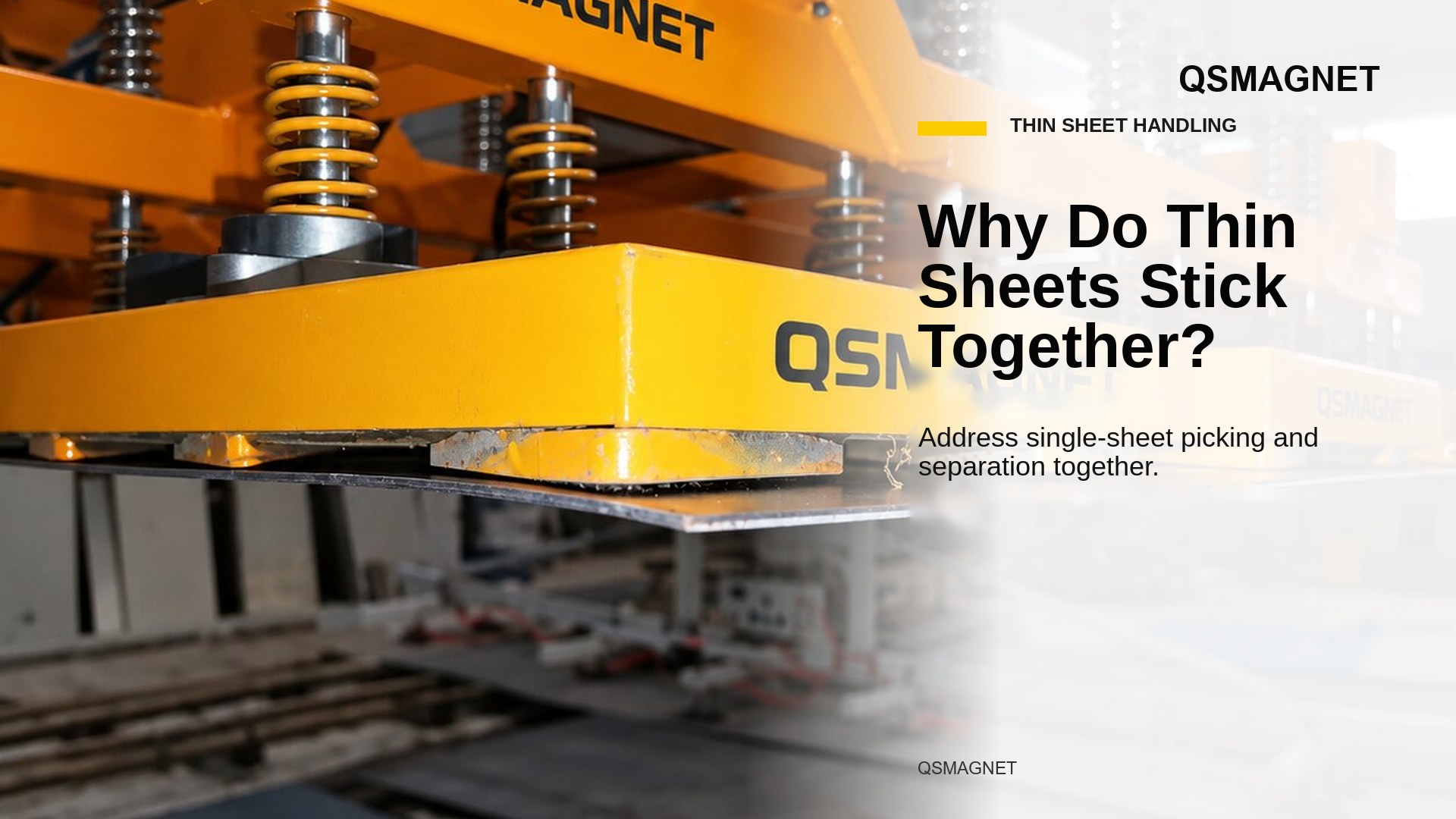
Thin sheets can move together because of an oil film, burrs and the vacuum that forms between plates during lifting. To pick single sheets, separation and lifting needs must be assessed together. When you look at QSMAGNET sheet and plate handling solutions, tell the technical team about the sticking problem in your stack as well.
First, describe the cause of sticking
Does the problem happen with every delivery, or only with certain thicknesses and surfaces? Compare the same plate dry and oiled, its cut edges and the stacking arrangement. When sending samples, keep the surface condition you use in production; a single cleaned sample may not represent your daily working conditions.
Picking two plates together can cause problems when feeding the next machine. Being able to carry the sheet’s weight and picking only one plate from the stack are separate needs.
Choose the separation arrangement separately
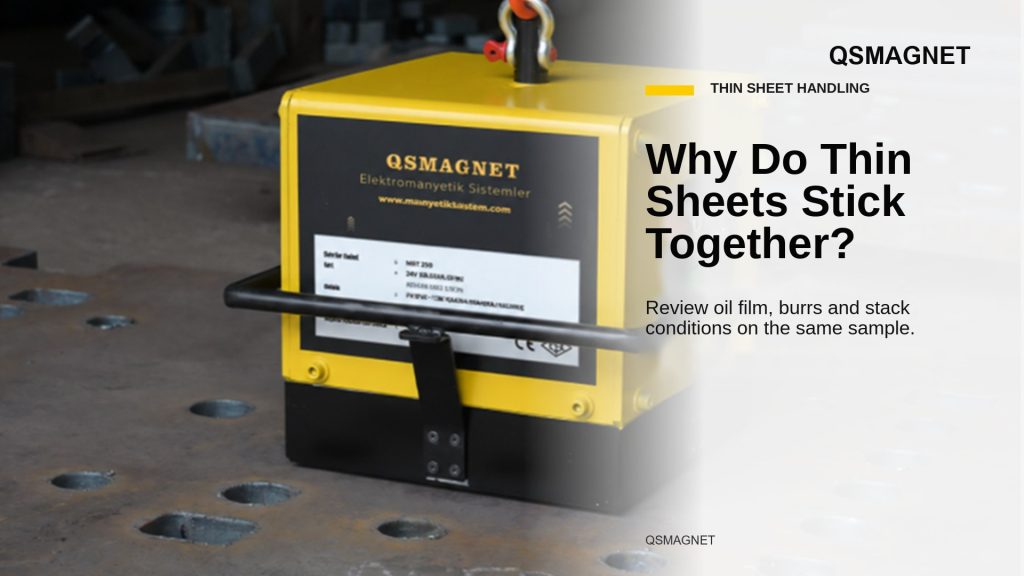
Magnetic sheet fanners work beside the stack to help separate suitable steel plates from each other. Selection takes plate size, thickness and sticking conditions into account; the same separation arrangement cannot be used for every stack.
In the project discussion, look for answers to three questions: How will the top plate be separated, which device will move it, and how will it be confirmed that only one plate has been picked? Describe these tasks separately rather than squeezing them into a single “lifting capacity” figure.
- Sample details: material grade, size, thickness and any oil or coating on the surface.
- Stack details: stack height, plate arrangement and edges accessible for a fanner.
- Feeding details: the next machine, the required working arrangement and the need for double-sheet detection.
Match the trial to real production
Include the example that causes the most problems in the assessment, along with the sheet that separates most easily. Record the results by plate type. Ask to see clearly in the quote which material and stacking conditions it is based on, and share changes in production with the technical team.
Frequently asked questions
Does a stronger magnetic hold solve single-sheet picking?
Not on its own; separation, handling and single-sheet verification must each be addressed separately.
Is the same fanner suitable for every thin sheet?
No. Selection depends on plate size, thickness and sticking conditions.
Send QSMAGNET a sample of your problem sheet and a video of picking from the stack, and request an application assessment for your handling, separation and single-sheet verification needs.
Related articles
All articles
Sheet Handling
What Is the Difference Between Moving a Sheet Bundle and Lifting a Single Plate?
Why are moving a sheet bundle and lifting a single plate different? Assess the…
Read article
Sheet Handling
How to Lift Oily or Rusty Sheets
Assess the gripping surface correctly on oily or rusty sheets. Learn how surface conditions…
Read article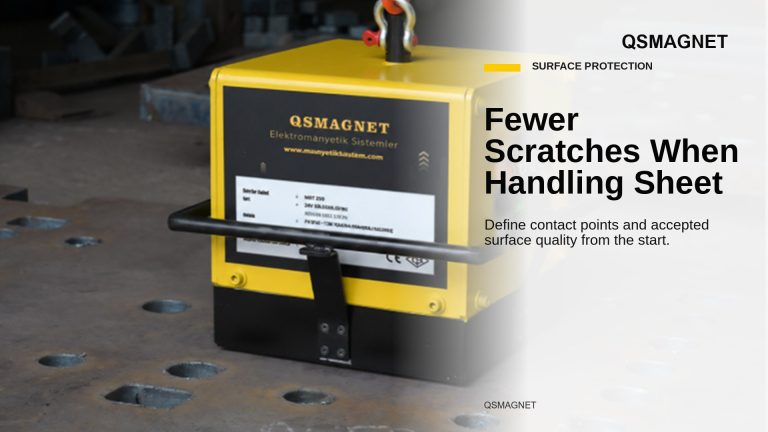
Sheet Handling
How to Reduce Scratches and Surface Marks When Handling Sheet
To reduce scratches and surface marks when handling sheet, define the contact points and…
Read article