
Handling Methods
How to Choose a Plate Lifting Clamp: A Guide to Plate Clamps and Sheet Grabs
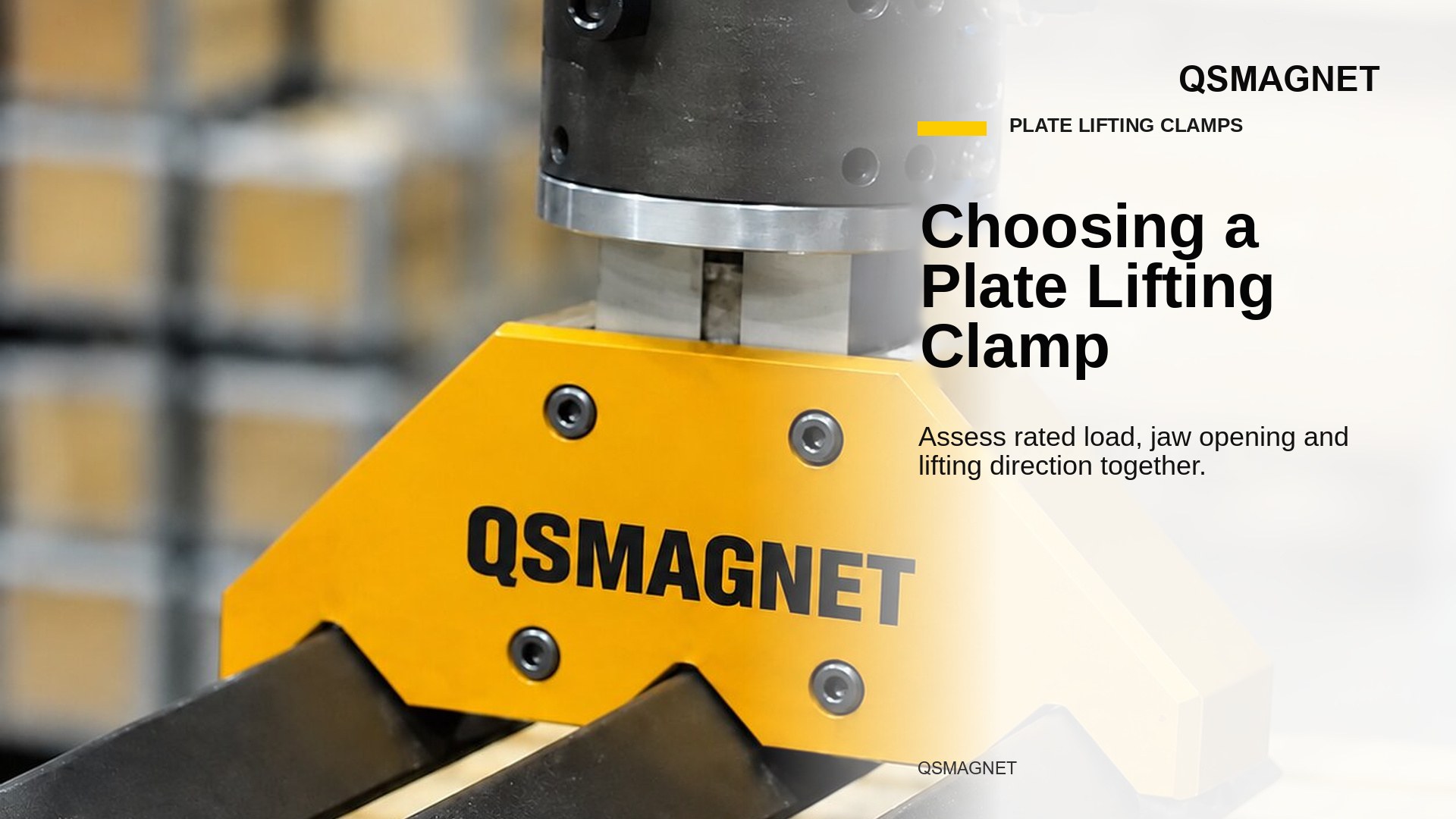
When choosing a plate lifting clamp, the plate’s thickness, surface hardness and lifting direction matter as much as its weight. A clamp that does not match the jaw opening and load conditions in its manual is not suitable, even if the rated load on the label is high.
For repetitive steel sheet handling, you can also look at the QSMAGNET magnetic lifting system.
Check three things besides the rated load
- Jaw opening: The thickness of the sheet must fall within the clamp’s permitted gripping range.
- Lifting direction: Choose a model the manufacturer approves for horizontal handling, vertical lifting or turning, as required.
- Material and load: Check surface hardness and any minimum load requirement in the manual for that model.
Whatever local name you use for the clamp, describe it by model and direction of use when you ask for a quote. Just saying “a one-tonne clamp” does not give the supplier enough information to understand the real application. Share a photo of the sheet and how it will be moved as well.
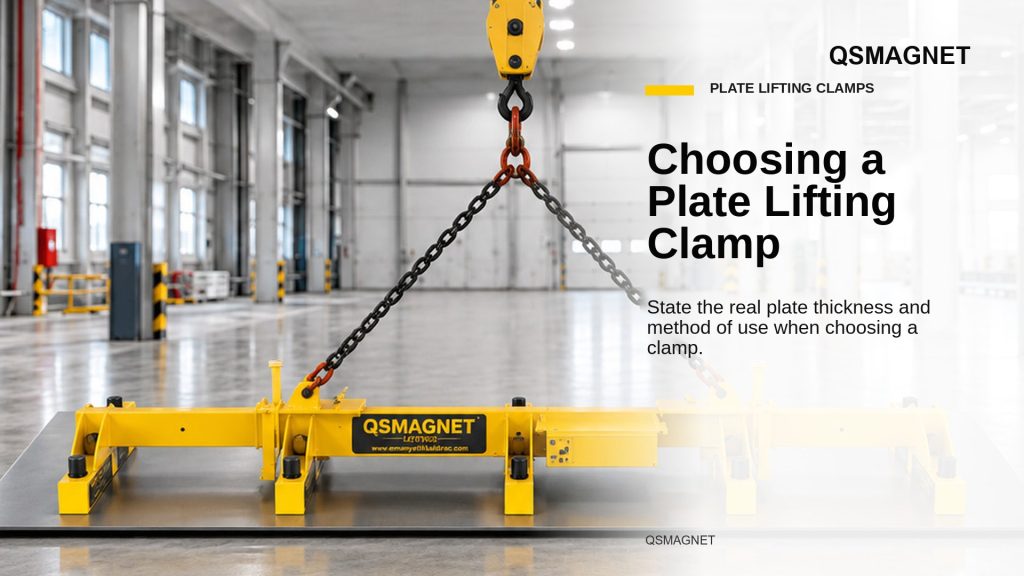
When to consider a magnetic option for continuous loading
If you move steel plates from the same stack to a production line all day long, base your equipment choice on that repetitive task. Record where the operator attaches the device, at which step they wait, and what they do during release. That makes your expectations from a new system clear.
When you speak with QSMAGNET, define the most common size and the hardest-to-handle plate separately. Also mention the jobs your current clamp does well. The goal is to define the scope of a magnetic system for a specific need in your production flow; you don’t have to choose the same solution for every job.
QSMAGNET’s remote-controlled option lets the operator run the system from a remote control. Consider this option for repetitive sheet loading tasks.
Frequently asked questions
Can a horizontal plate clamp be used for vertical lifting?
Only if the manufacturer approves that model for this use. The product name or appearance is not enough.
Is a clamp with a higher rated load always the better choice?
No. Some models also have a minimum load requirement; the capacity range and the application must be checked together.
Send QSMAGNET the sheet thickness, weight and lifting direction, and we will assess a magnetic alternative suited to your work.
Related articles
All articles
Handling Methods
Clamp, Vacuum or Magnet? Which Is Right for Handling Steel Sheet?
Compare plate clamps, vacuum lifters and magnetic lifters for sheet handling by material, surface…
Read article
Handling Methods
How to Choose a Vacuum Sheet Lifting System
When choosing a vacuum sheet lifter, review the surface, pad layout and operating conditions…
Read article
Handling Methods
How Are Steel Plates Moved? Handling Solutions from Storage to the Production Line
When moving steel plates from storage to production, plan the stack, handling route and…
Read article