
Handling Methods
How to Choose a Vacuum Sheet Lifting System
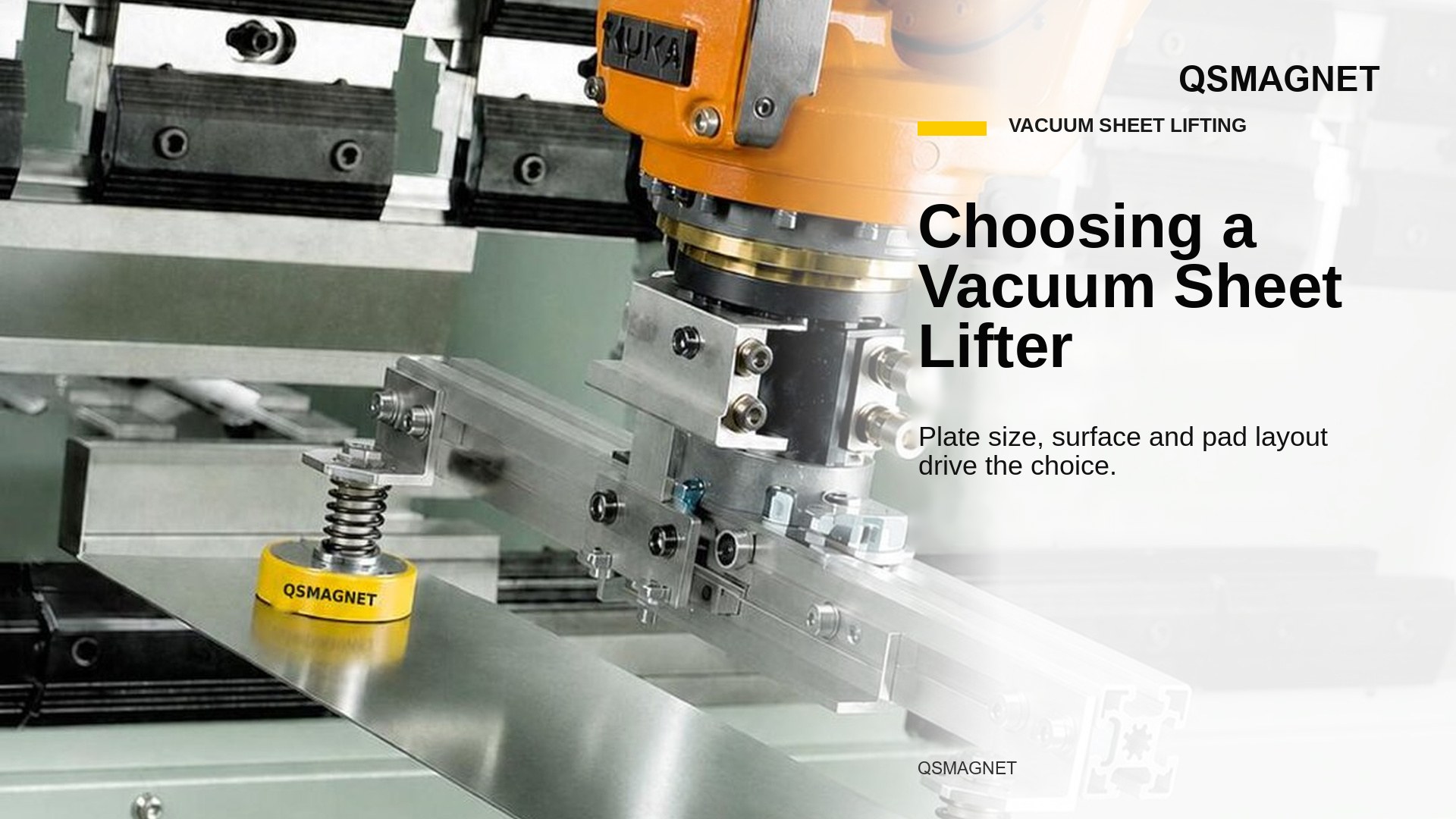
When choosing a vacuum sheet lifting system, assess plate size, surface and pad layout along with capacity. The pads must make proper contact with the load, and operating conditions must stay within the limits of the chosen model.
If you are comparing alternatives for steel sheet, take a look at the QSMAGNET magnetic sheet lifting system.
Define the application before counting pads
The same layout may not work for a wide plate and a narrow part. Adjustable pad positions and connections that compensate for height differences are available on some systems; check whether the quote includes these features.
- Material list: List steel, aluminium and the stainless grades you use separately.
- Surface information: State whether there is oil, protective film, paint, holes or cut-outs.
- Workflow: Describe the stack size, the drop-off point and any rotation movement required.
Also ask about equipment such as a vacuum gauge, alarm, reserve tank and check valve. What matters is not only that these components are present, but that the operating documentation explains how they behave in each situation.
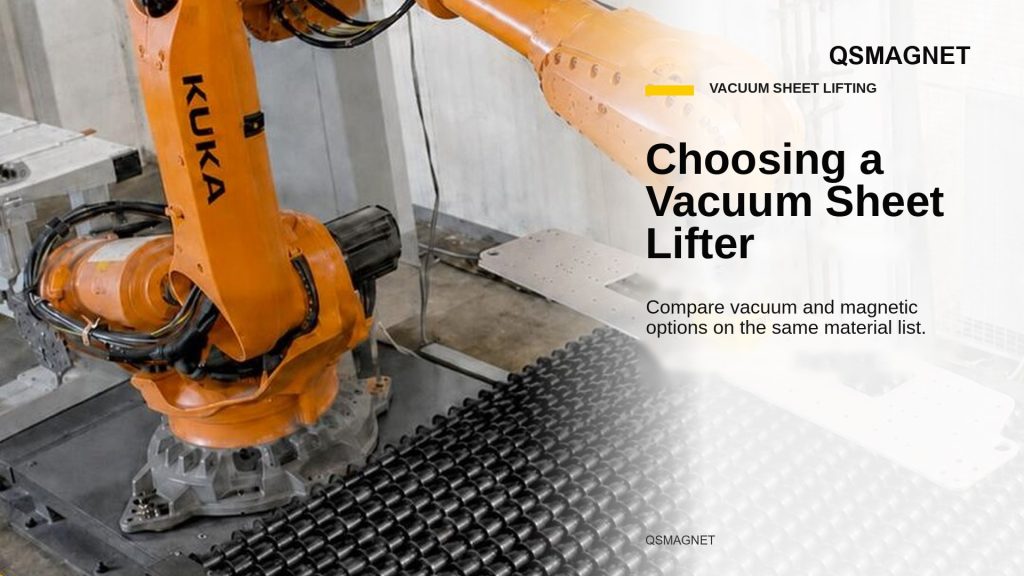
How to compare a magnetic solution for steel sheet
Start by separating the materials to be handled. Vacuum can also be used for some steel grades that cannot be held magnetically, so don’t treat all metal plates as if they belonged to one product group.
For a line that processes steel sheet continuously, ask for two quotes covering the same job. Compare them on the same plate list, the same stack and the same drop-off area. Bring tool-change needs, control method and maintenance scope into the discussion as well. That way you assess the fit with your production rather than just the price of the device.
If you process steel sheet in different sizes, also consider QSMAGNET’s telescopic systems.
Frequently asked questions
Can vacuum be used on oily sheets?
Yes, there are special pad solutions for oily surfaces. Suitability must be confirmed for the pad material and application conditions.
Will the load drop immediately if the power fails?
That can’t be said for every system. There are designs with a reserve and check valve; the behaviour during a power cut must be taken from the model’s documentation.
Send QSMAGNET your plate list and a photo of your current handling setup, and we will assess the magnetic option for your steel sheets.
Related articles
All articles
Handling Methods
Clamp, Vacuum or Magnet? Which Is Right for Handling Steel Sheet?
Compare plate clamps, vacuum lifters and magnetic lifters for sheet handling by material, surface…
Read article
Handling Methods
How to Choose a Plate Lifting Clamp: A Guide to Plate Clamps and Sheet Grabs
Choosing a plate lifting clamp? Weigh rated load, jaw opening and lifting direction together…
Read article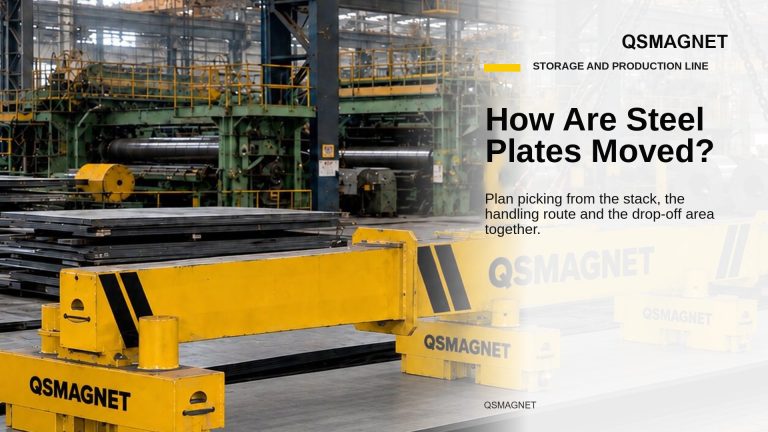
Handling Methods
How Are Steel Plates Moved? Handling Solutions from Storage to the Production Line
When moving steel plates from storage to production, plan the stack, handling route and…
Read article