
Handling Methods
How Are Steel Plates Moved? Handling Solutions from Storage to the Production Line
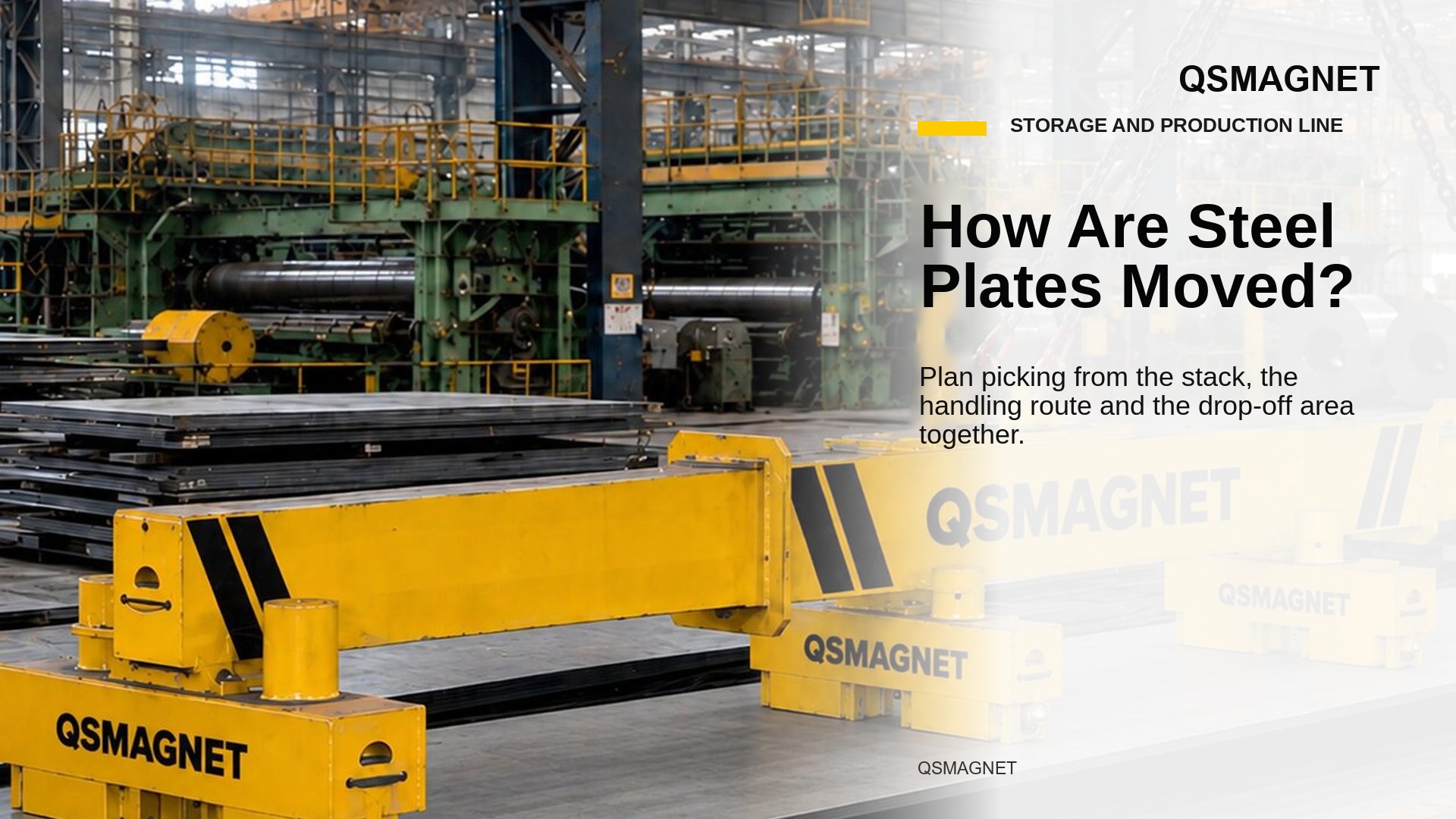
Steel plate handling is planned by considering picking from the stack, moving and setting down at the right point together. Along with the right device, stack layout, access and the handling route are part of the job.
For your steel plate flow, take a look at the QSMAGNET magnetic sheet and plate lifting system.
1. Define the material and the starting point
First, clarify which sheet goes to which machine. Rather than describing your daily work with a single handling example, list the frequently used plates and the special cases separately. Add the waiting time you want the new system to remove to the same list.
- Material: Steel grade, width, length, thickness and the weight of a single plate.
- Stack: How plates are arranged, the supports between them and the access area for the device.
- Destination: Machine table or rack size, approach direction and drop-off position.
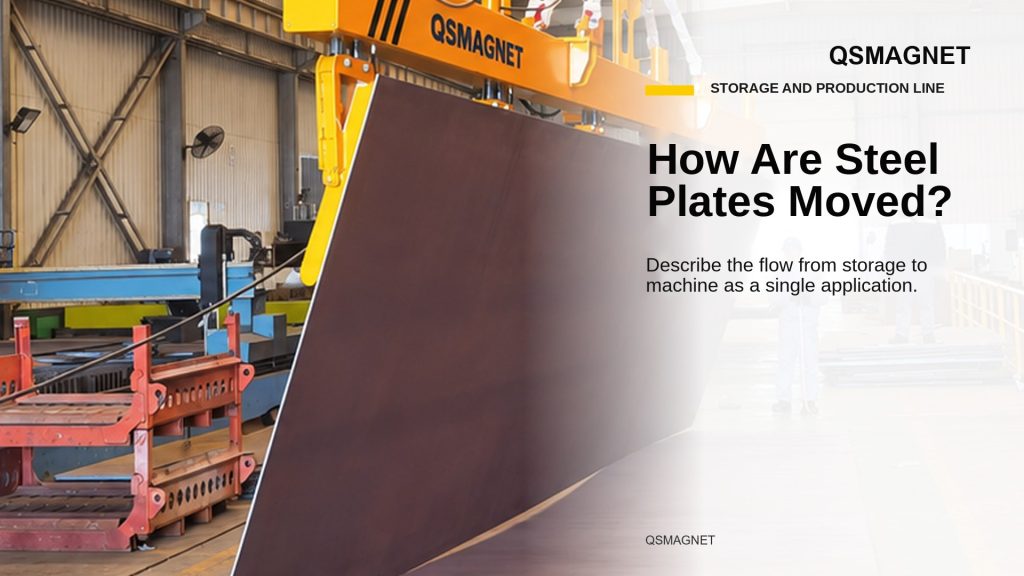
2. Match the holding layout to the handling task
When a magnetic system is assessed, the sheet’s flexibility, surface and usable contact area are reviewed along with its weight. A large, thin plate may need more than one holding point; it is not assumed that a device used for another part will do the same job.
A short video of your current setup makes the quote discussion concrete. Show the preparation before picking up the load and the work after setting it down. Then the conversation can cover the whole task, not just the crane movement.
You can assess QSMAGNET’s telescopic sheet system against your own stack and machine layout.
3. Prepare the drop-off area in advance
The handling plan should define the area the load will pass through, the people around it and the support arrangement at the destination. Being able to lift the sheet is not enough; placing it stably at the destination must also be planned. The work is carried out according to the equipment instructions.
In the project discussion, show the pick-up and drop-off positions in separate photos and describe the final placement you expect.
Frequently asked questions
Are a single sheet and a sheet bundle handled the same way?
No. Moving several plates together requires a separate suitability assessment.
Do I need to change my whole storage area for a new system?
Don’t assume that from the start. Share your current layout first; any changes needed can be clarified during the application assessment.
Send QSMAGNET photos of the route from the stack to the machine and your sheet list, and let’s discuss the right solution for your handling needs.
Related articles
All articles
Handling Methods
Clamp, Vacuum or Magnet? Which Is Right for Handling Steel Sheet?
Compare plate clamps, vacuum lifters and magnetic lifters for sheet handling by material, surface…
Read article
Handling Methods
How to Choose a Plate Lifting Clamp: A Guide to Plate Clamps and Sheet Grabs
Choosing a plate lifting clamp? Weigh rated load, jaw opening and lifting direction together…
Read article
Handling Methods
How to Choose a Vacuum Sheet Lifting System
When choosing a vacuum sheet lifter, review the surface, pad layout and operating conditions…
Read article