
Laser Cutting
How Is Sheet Loaded onto a Laser Cutting Machine?
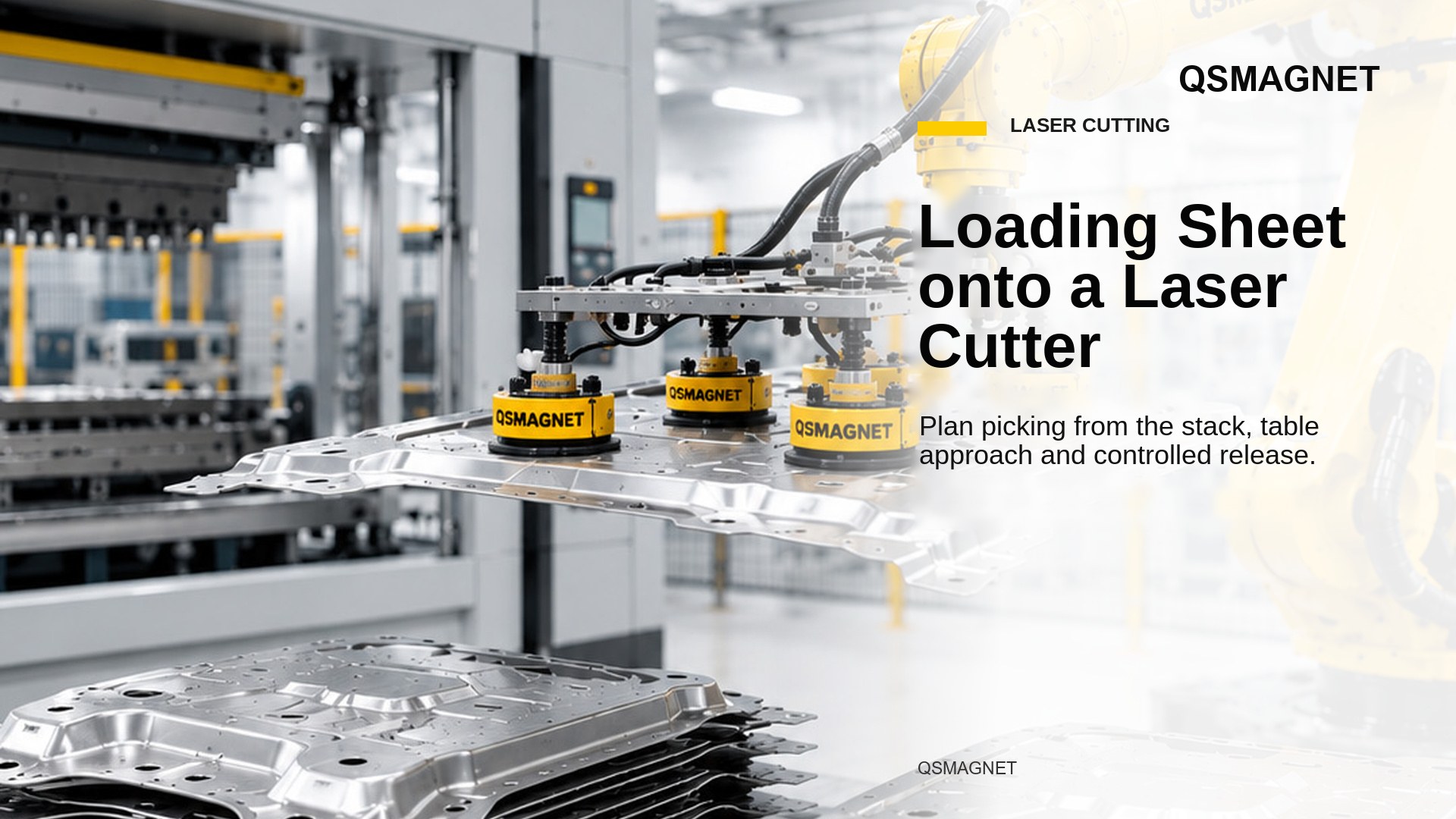
Sheet loading is planned around picking the plate from the stack, moving it to the machine and setting it down on the loading area in a controlled way. The sheet’s properties should first be assessed together with your existing crane and table layout. Plants that process steel sheet can include QSMAGNET magnetic solutions for laser and plasma applications in this assessment.
A magnetic system holds suitable steel sheet by its surface, supporting crane handling to the table and controlled positioning.
First, find the cause of waiting
Is your machine stopping because it is waiting for sheet, or is the real time lost separating the plate from the stack? Observe the loading tasks repeated during a shift. Note which size is handled most, where the operator intervenes and at which point the plate is repositioned. That way your equipment request is based on a concrete task.
A full sheet and cut parts are different
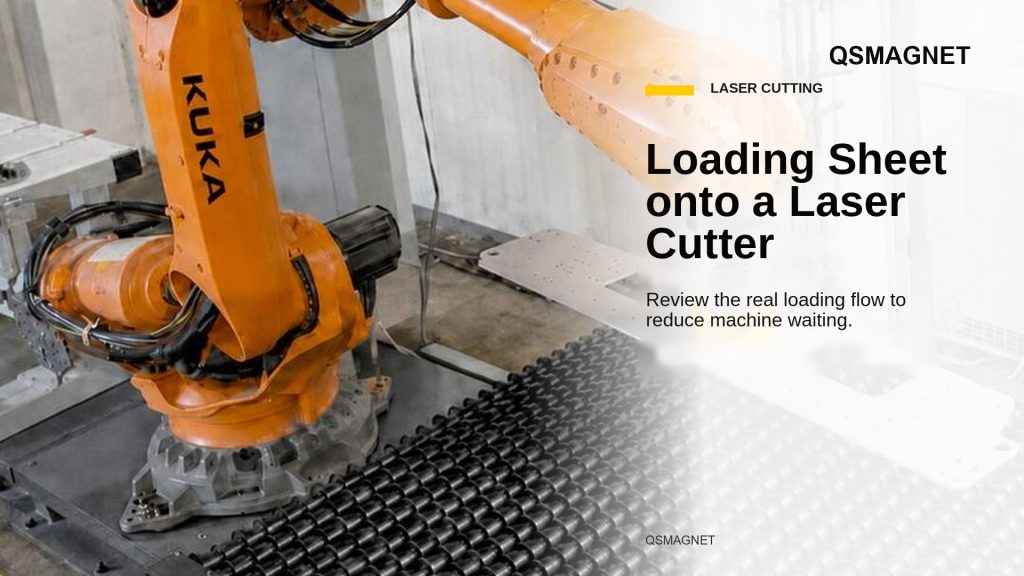
Before cutting, the whole surface of the plate is available; after cutting, different shapes and gaps appear. In magnetic lifting, contact area and plate flexing are assessed along with weight. The suitability of the same handling layout for both jobs must be verified.
- Plate details: share the steel grade, smallest and largest size, thickness and weight.
- Machine details: state the table size, access direction and available loading height.
- Process details: explain whether you want loading only, or unloading after cutting as well.
Define the scope of automation clearly
Automatic vacuum loading solutions are also available on laser lines. The scope of a lifting device used with a crane differs from loading automation integrated into the machine. When requesting a quote, write down the tasks the operator will do and the steps you expect to happen automatically separately.
For example, describe your need as “moving three different plate sizes to the same table with our existing crane”. Add a photo showing the drop-off point so the problem you want to solve is clear at first glance in the quote discussion.
Frequently asked questions
Will the system always pick a single sheet from the stack?
Single-sheet separation is assessed separately; oily or sticking plates may need an application-specific separation arrangement.
Can it be used with my existing laser machine?
Suitability is determined by reviewing the crane, access and table dimensions; share your machine model from the start.
Send QSMAGNET your sheet sizes, machine model and a photo of the loading area, and request an assessment for a magnetic handling solution that suits your current layout.
Related articles
All articles
Laser Cutting
Vacuum or Magnetic System for Loading Sheet in Laser Cutting?
Compare vacuum and magnetic systems for laser sheet loading by material, surface and cutting…
Read article
Laser Cutting
How Are Parts Picked from the Table After Laser and Plasma Cutting?
Plan part picking after laser and plasma cutting by geometry, contact area and temperature…
Read article
Handling Methods
Clamp, Vacuum or Magnet? Which Is Right for Handling Steel Sheet?
Compare plate clamps, vacuum lifters and magnetic lifters for sheet handling by material, surface…
Read article