
Laser Cutting
Vacuum or Magnetic System for Loading Sheet in Laser Cutting?
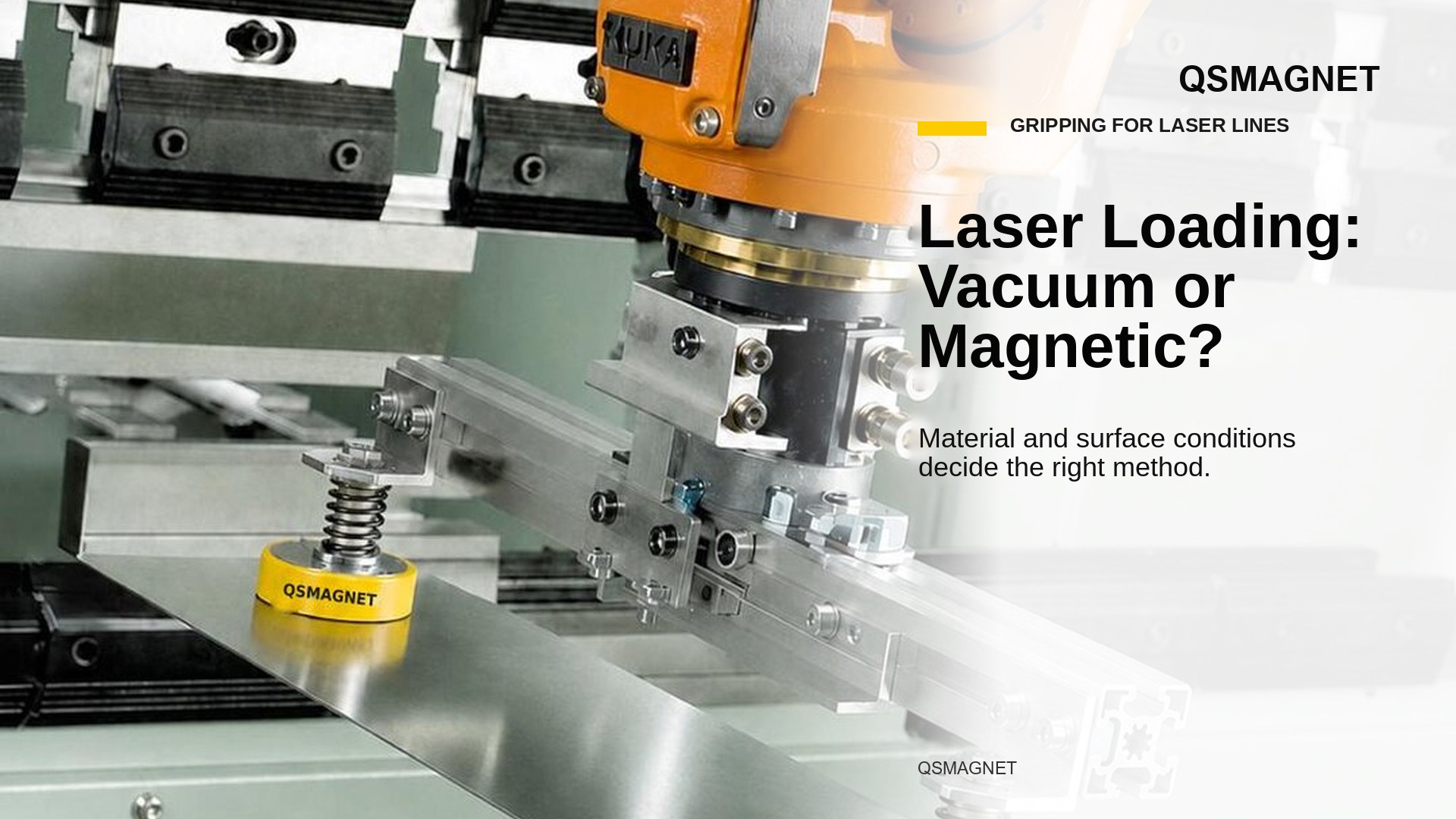
For laser sheet loading, the choice depends on the sheet material and the gripping surface. Vacuum can also be considered for non-magnetic materials on a suitable surface; a magnetic solution requires the material to be suitable for magnetic holding. For your steel sheet application, take a look at QSMAGNET magnetic handling solutions for laser lines.
The QSMAGNET magnetic holding layout can be designed to suit the sheet size, so the lifting solution is adapted to the plates you work with and to the machine table.
Assess material and surface together
Is your workshop cutting only carbon steel, or does the job list also include aluminium and different stainless grades? In the quote request, write the material grades rather than “metal sheet”. If different materials are processed on the same table, assess the right handling method for each product group separately.
Vacuum systems include special pad designs for oily sheets, so oil on the surface does not rule out vacuum by itself. The right pad, surface and operating conditions are chosen together.
- Full-sheet loading: share the sheet sizes you use regularly and their surface condition.
- Unloading after cutting: add a cutting plan showing small parts, holes and the scrap skeleton.
- Material changes: state which product groups you switch between in the same shift.
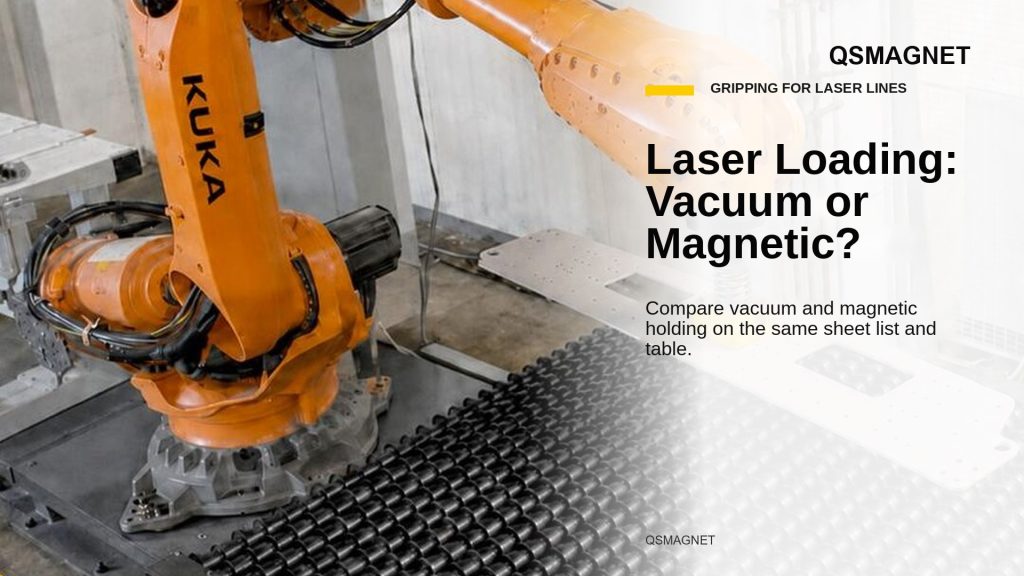
Treat the post-cutting need separately
In a magnetic system, the gripper’s real contact area with the part matters. A total weight within capacity does not show that each cut part is held properly.
Make the comparison with your own work: discuss picking the same sheet from the stack, placing it on the table and unloading at the end of the process. List the points where the operator repositions parts. Make sure both quotes cover the same job; if one includes only loading and the other includes unloading and integration, align the scope first.
Don’t send only your flattest plate for a sample assessment. Include the surfaces you work with often and a cutting plan you find difficult in production. That way the selection is based on samples that represent your daily job list.
Frequently asked questions
Can a magnetic system lift aluminium sheet?
Aluminium sheet cannot be lifted with standard magnetic holding; a different handling method is assessed.
Can’t vacuum be used on oily sheet?
It can; it requires a pad and system selection that suit the application.
Send QSMAGNET your material list and an example cutting plan, and assess together which of your jobs suit a magnetic solution.
Related articles
All articles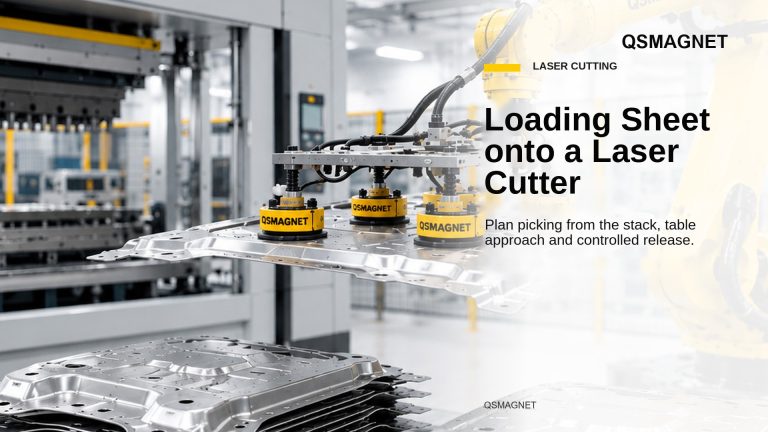
Laser Cutting
How Is Sheet Loaded onto a Laser Cutting Machine?
When loading sheet onto a laser cutting machine, assess the material, table size and…
Read article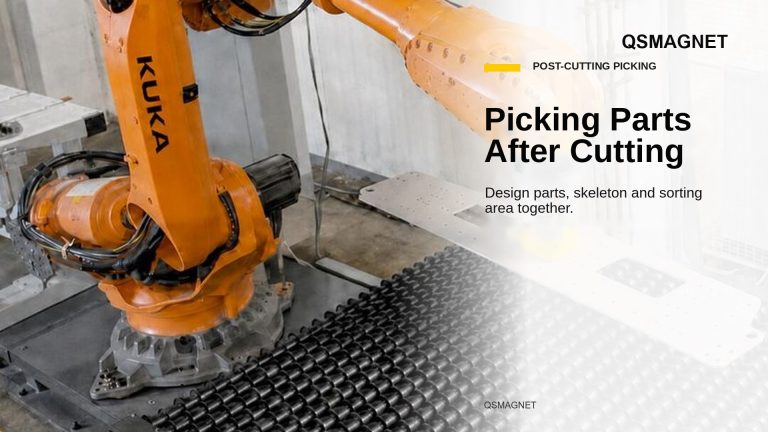
Laser Cutting
How Are Parts Picked from the Table After Laser and Plasma Cutting?
Plan part picking after laser and plasma cutting by geometry, contact area and temperature…
Read article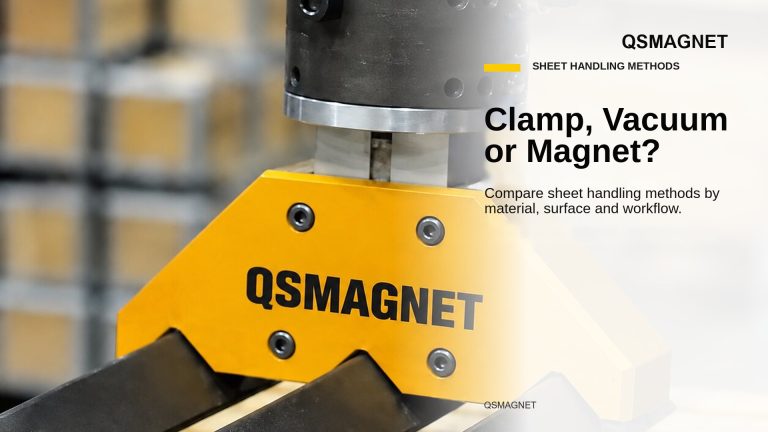
Handling Methods
Clamp, Vacuum or Magnet? Which Is Right for Handling Steel Sheet?
Compare plate clamps, vacuum lifters and magnetic lifters for sheet handling by material, surface…
Read article