
Robotic Grippers
Which Gripper Should You Choose for Robotic Steel Part Palletizing?
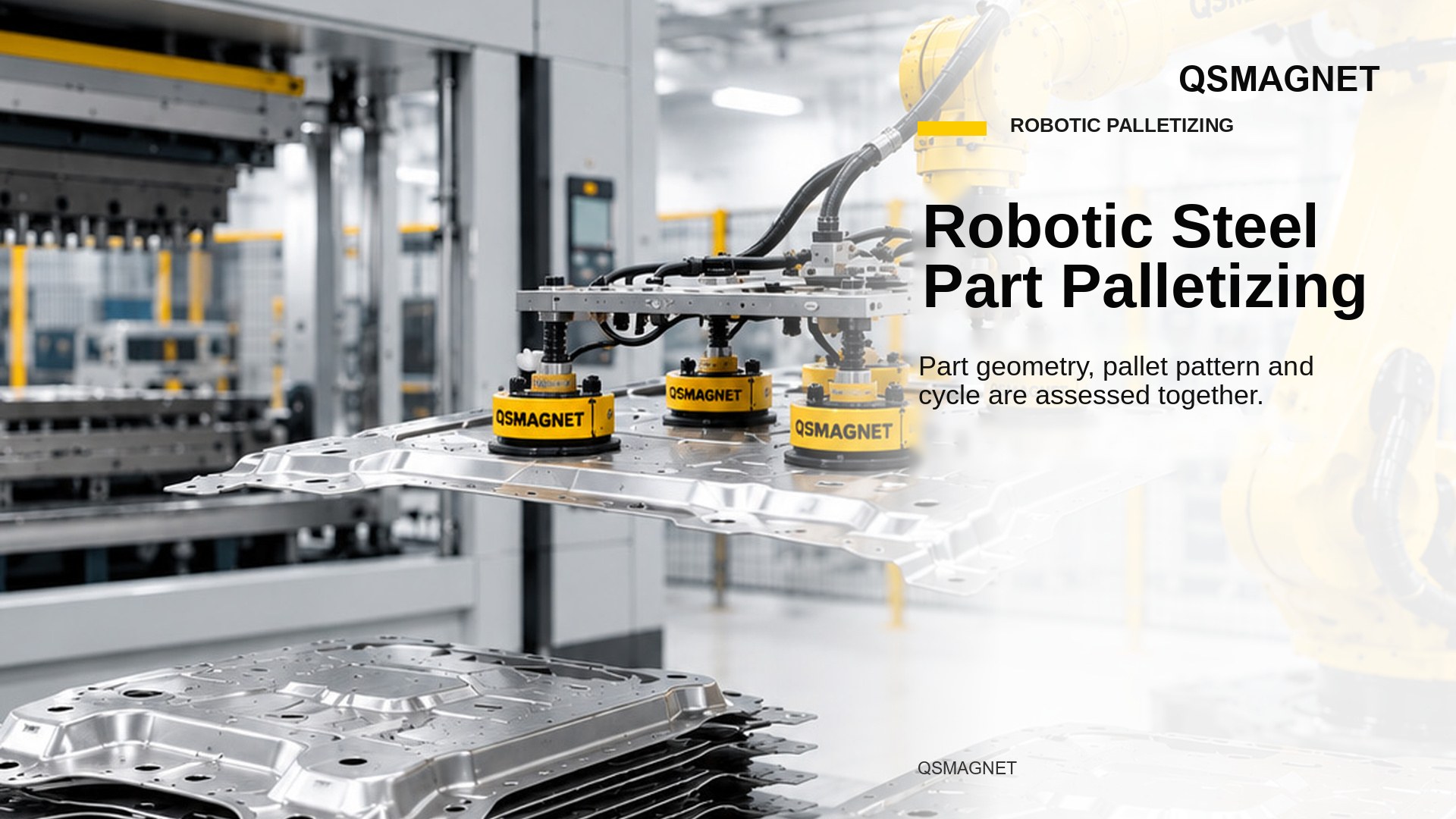
For robotic palletizing of steel parts, the gripper is chosen according to the surface it picks the part from and the pattern in which it places parts on the pallet. QSMAGNET magnetic gripper solutions for automation can be assessed for palletizing and depalletizing applications. The right gripping method must be defined by reviewing the part and the robot motion together.
A magnetic gripper can be used to automate placing a steel part taken from a conveyor in its target position on the pallet with a robot.
First, describe the pallet pattern
Will the parts be arranged in the same orientation, or will the orientation change on each layer? Will separators be placed between products? Use a drawing to describe the final appearance you want when preparing the pallet for shipping. The gripper’s task should cover placing the part in the right position as well as picking it from the conveyor.
For example, if you are building a pallet with a different product in each row, share the part sequence. Discuss with your integrator which product the robot will pick from which position and how the program will track product changes. If part recognition or vision is needed, add it to the project scope separately.
Assess the robot payload as a whole
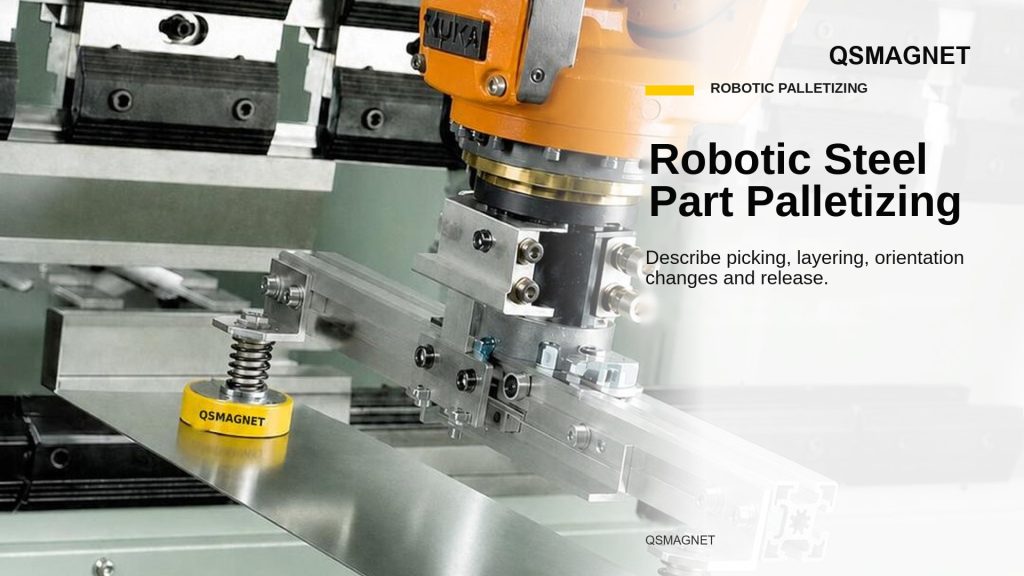
The gripper, connections and part together make up the payload the robot carries. The centre of gravity and inertia also affect the robot’s motion capacity. So the dynamic loads created when reaching different points on the pallet must be assessed.
- Part family: dimensions, weights, steel grades and surfaces suitable for gripping.
- Pallet plan: row and layer pattern, interlayer materials and the required release positions.
- Cycle: target quantity, pick distance, orientation changes and how pallets are changed.
Verify release and depalletizing separately
Magnetic part detection can be affected by the holding position and the surrounding metal geometry. Plan how it will be verified that the part has been picked and released. Include different levels of the stack in the assessment; don’t limit the scope to placement on an empty pallet.
If you also want the same system to pick parts from a full pallet, state this task from the start. Describe the product sequence, accessible surfaces and how interlayers will be removed separately. Ask to see clearly in the quote which tasks will be automated and which auxiliary operations will remain.
Frequently asked questions
Can several parts be picked together?
It can be assessed within the project scope if proper holding of each part and the total robot payload are verified.
Can a magnetic gripper pick a cardboard interlayer?
No. A separate suitable gripping method is needed for non-magnetic interlayer materials.
Send QSMAGNET your part list, an example pallet pattern and your robot model, and request an assessment of a magnetic gripper layout that suits your palletizing application.
Related articles
All articles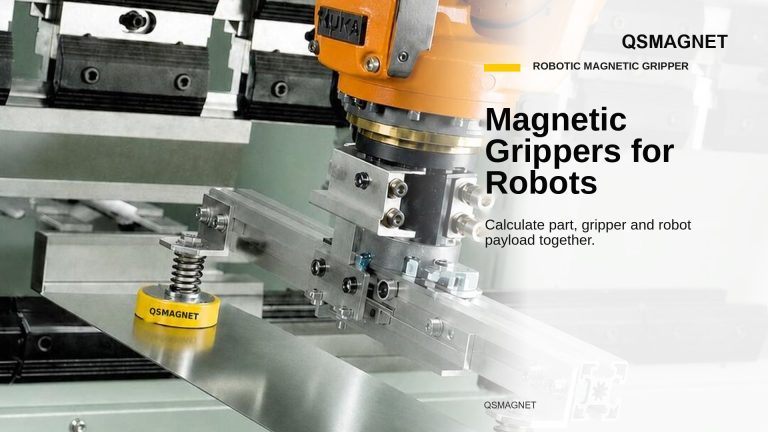
Robotic Grippers
How to Choose a Magnetic Gripper for a Robot
Choosing a magnetic gripper for a robot? Assess material, total payload, centre of gravity…
Read article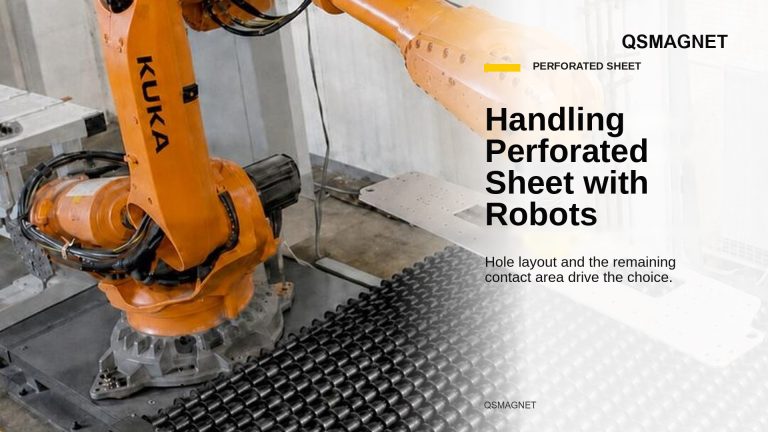
Robotic Grippers
How Is Perforated Sheet Handled with a Robot? Choosing a Vacuum or Magnetic Gripper
For perforated sheet handling, assess vacuum and magnetic grippers by hole layout, contact area…
Read article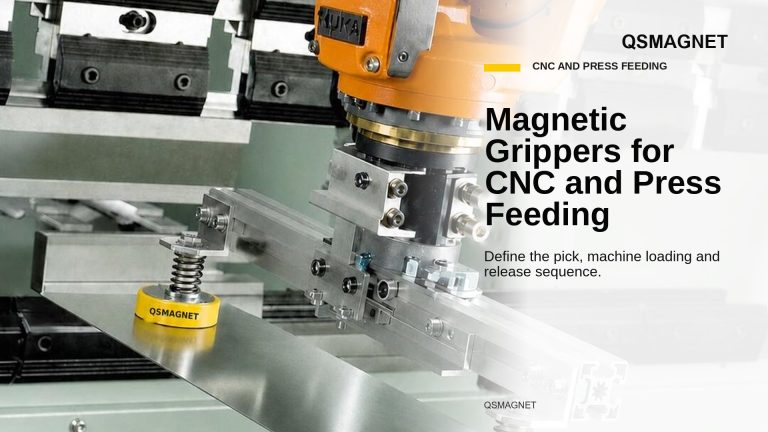
Robotic Grippers
How to Choose a Magnetic Gripper for CNC and Press Feeding Robots
For CNC and press feeding, choose a magnetic gripper together with the part, fixture…
Read article