
Robotic Grippers
How to Choose a Magnetic Gripper for a Robot
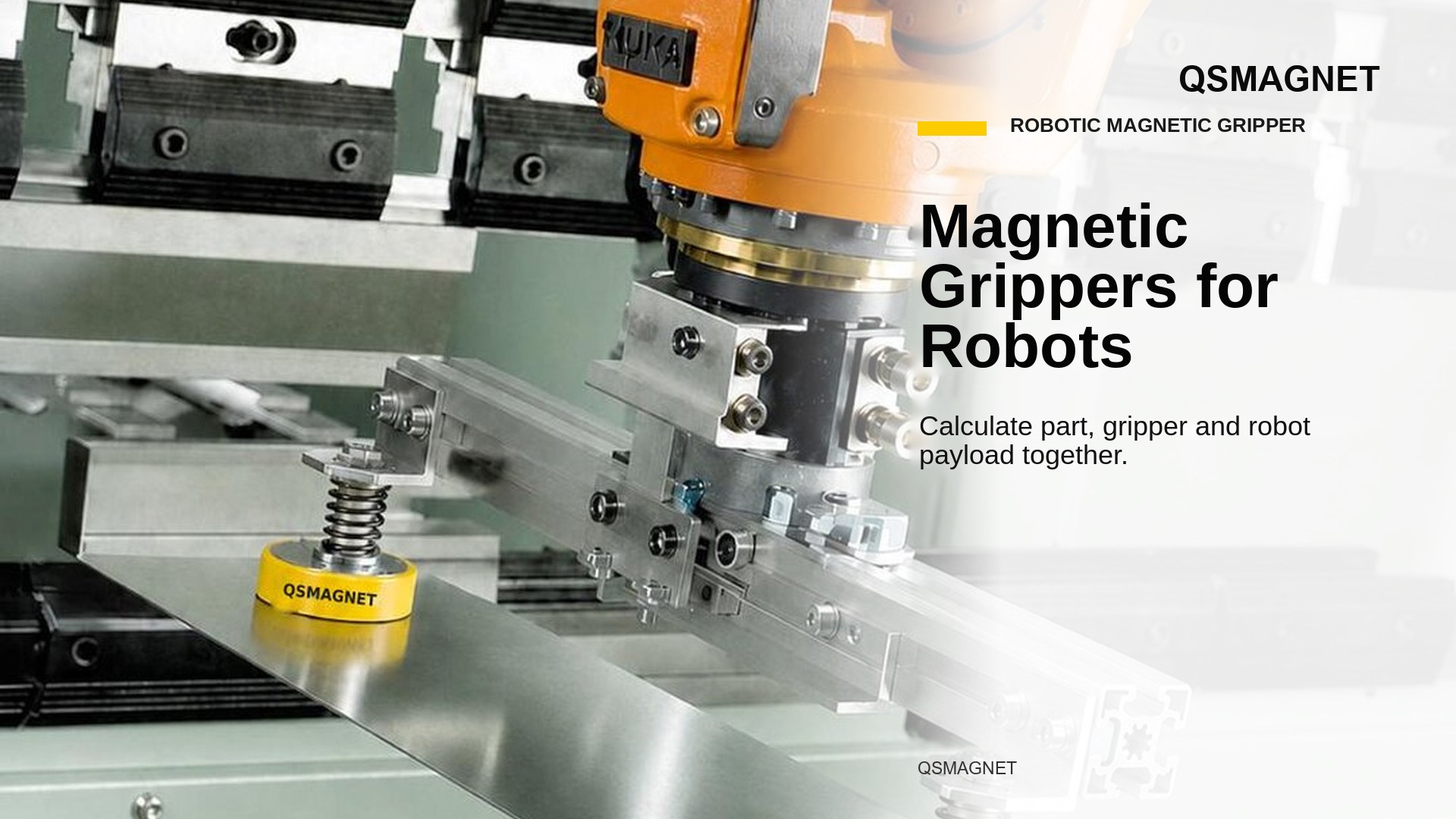
Choosing a magnetic gripper for a robot starts with whether the part is suitable for magnetic holding and the total payload the robot will carry. QSMAGNET magnetic gripper solutions for automation can be assessed against the geometry of the steel part and the production task.
A magnetic gripper integrated into the robot arm grips a suitable steel part by its surface, bringing picking, moving and placing into the automation cycle.
Account for the gripper’s weight as well as the part
The payload carried by the robot includes the gripper and its connections as well as the workpiece. The distance of the centre of gravity from the robot flange, inertia and the dynamic loads created during motion are also part of the assessment. Selection is not based on the part’s weight in kilograms alone.
For example, show the expected motions separately for moving the same part a short distance and for rotating the wrist to set it down at another station. Write down your cycle target, but have the suitability of the speeds and motions to be used verified with your robot integrator.
- Part: material grade, size, thickness, weight and the surface the gripper will contact.
- Robot: make/model, the mounting interface to be used and the existing control interface.
- Task: pick/place positions, any need to change orientation and the target production cycle.
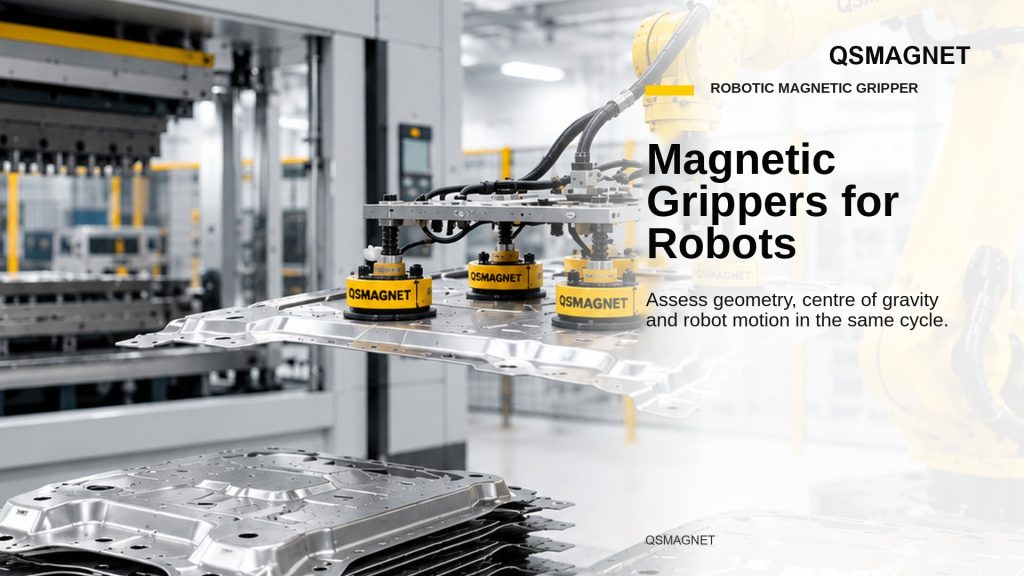
Define the grip command and feedback
The behaviour of part detection functions can depend on the sensor used, the part geometry and the holding position. Suitability must be verified on the real part.
In the quote discussion, ask how the “grip” command will be given and how it will be confirmed that the part has been picked and released. Have the integration design define the state the robot will stay in when an error message occurs. Clarify the scope of electrical connection and communication without assuming these functions are ready-made on your existing robot.
See the application limits with samples
Don’t choose only the easiest-to-hold part for the assessment. Share the thinnest part, different surface conditions and examples with a shifting centre of gravity too. Ask to see in the quote which parts are covered and which adjustments will be needed at product changeover. That makes it clear which information will need to be reviewed again when new parts are introduced.
Frequently asked questions
Can every metal be handled with a magnetic gripper?
No. Other gripping methods are chosen for materials that are not suitable for magnetic holding.
Will it fit my existing robot directly?
Flange, total payload, control connections and working motions must be verified for each project.
Send QSMAGNET your robot model, part drawing and target cycle, and request an assessment of a magnetic gripper and integration scope that suit your application.
Related articles
All articles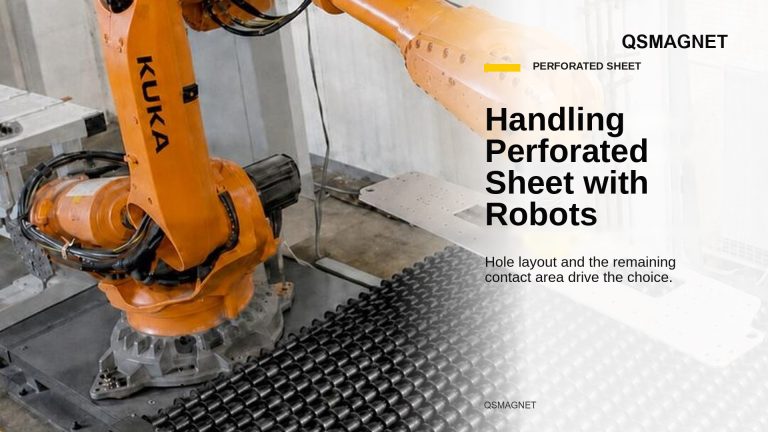
Robotic Grippers
How Is Perforated Sheet Handled with a Robot? Choosing a Vacuum or Magnetic Gripper
For perforated sheet handling, assess vacuum and magnetic grippers by hole layout, contact area…
Read article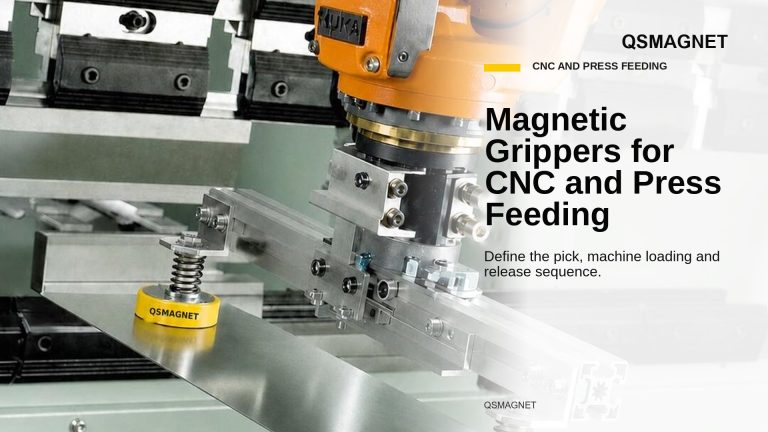
Robotic Grippers
How to Choose a Magnetic Gripper for CNC and Press Feeding Robots
For CNC and press feeding, choose a magnetic gripper together with the part, fixture…
Read article
Robotic Grippers
Which Gripper Should You Choose for Robotic Steel Part Palletizing?
For robotic steel part palletizing, choose the gripper by part shape, payload, pallet pattern…
Read article