
Robotic Grippers
How to Choose a Magnetic Gripper for CNC and Press Feeding Robots
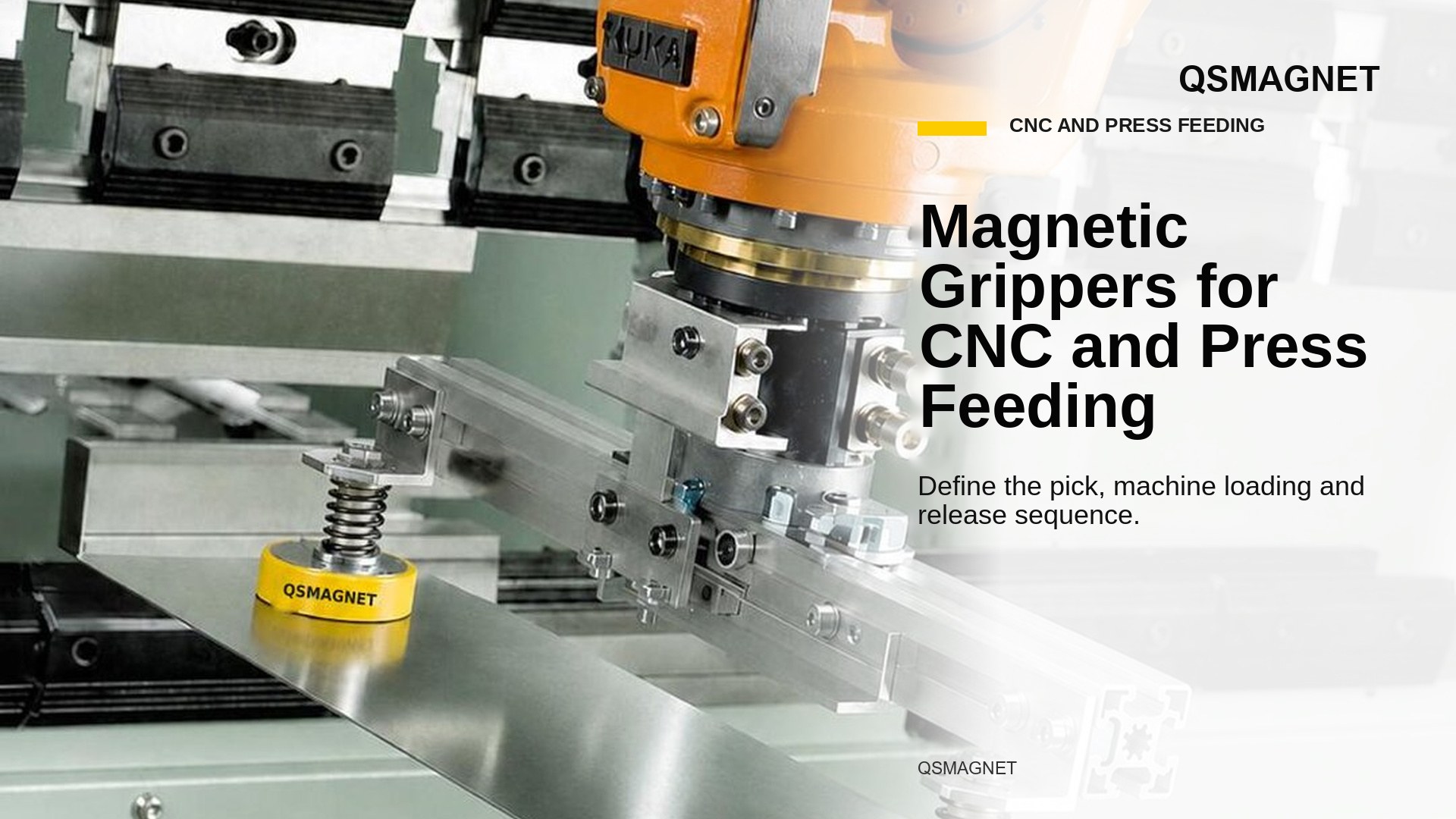
For CNC and press feeding, a magnetic gripper is chosen together with the task of picking the part, placing it in the machine and removing it after processing. QSMAGNET magnetic gripper solutions for automation can be assessed for CNC and press feeding applications. Compatibility with the part and the machine must be verified within the project scope.
A compact magnetic gripper supports the robot in moving the steel part to the machine infeed; because it can be designed around the part geometry, it can be adapted to the feeding layout.
Define how the part will be handed over to the machine
Show which surface the gripper will approach from and how the part will sit in the vice, fixture or die. Describe the job expected of the handling gripper separately from the arrangement that clamps the part during processing. Add the clearances inside the machine and the direction in which the robot must retract to the drawing.
If the dimensions of the raw part and the machined part differ, assess both cases. The gripping surface at the first pick may have changed by the end of the process. Start the suitability discussion with both part drawings, and ask clearly which stages a single gripper layout will cover.
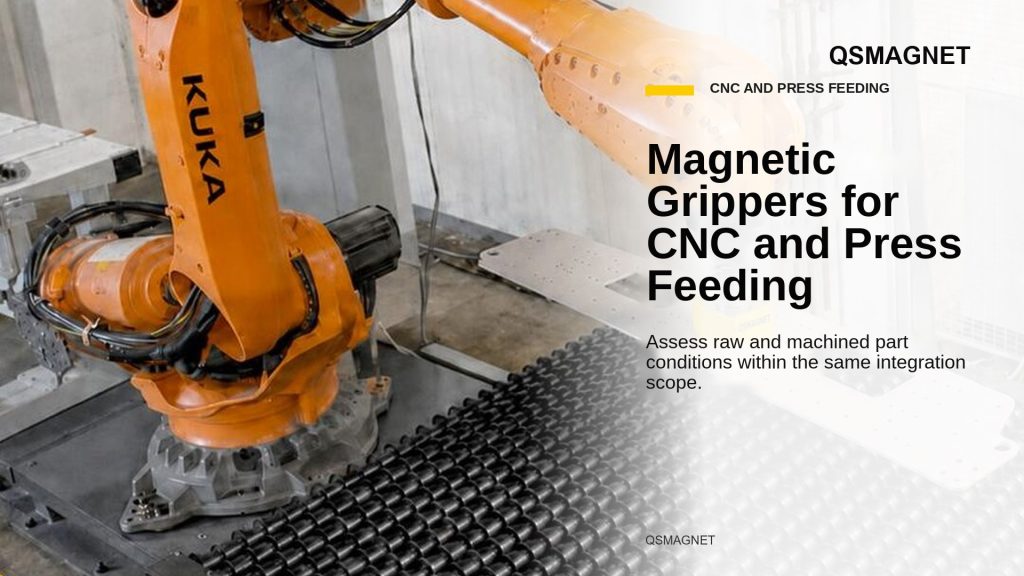
Clarify the command and verification sequence
Magnetic grippers are available with part presence detection options; this feature depends on the selected product and configuration. Decide with your integrator how the following states will be verified in your project:
- Part picked: verifying that the part is ready to move after the grip command.
- Placed in the machine: verifying that the part has reached the target position and that the machine’s acceptance conditions are met.
- Part released: verifying that the gripper has separated from the part and that the robot can retract.
When robot capacity is assessed, the total weight of the gripper and part, the centre of gravity and the dynamic loads during motion are considered together. Assess the target cycle on that basis.
Reflect production surface conditions in your samples
Metal chips building up on the gripper face, or a dirty and rough part surface, can affect magnetic contact. Share samples in their real production condition. Raise surface checks during the shift and access for cleaning when you discuss equipment layout as well.
Frequently asked questions
Does the same gripper fit every CNC machine and press?
The part, machine access, robot and control system must be assessed together.
Can non-magnetic parts be handled as well?
Standard magnetic holding is not suitable; a different gripping method suited to the material is needed.
Send QSMAGNET drawings of the raw and machined parts, the machine model and your robot details, and request an assessment of a magnetic gripper that suits your feeding application.
Related articles
All articles
Robotic Grippers
How to Choose a Magnetic Gripper for a Robot
Choosing a magnetic gripper for a robot? Assess material, total payload, centre of gravity…
Read article
Robotic Grippers
How Is Perforated Sheet Handled with a Robot? Choosing a Vacuum or Magnetic Gripper
For perforated sheet handling, assess vacuum and magnetic grippers by hole layout, contact area…
Read article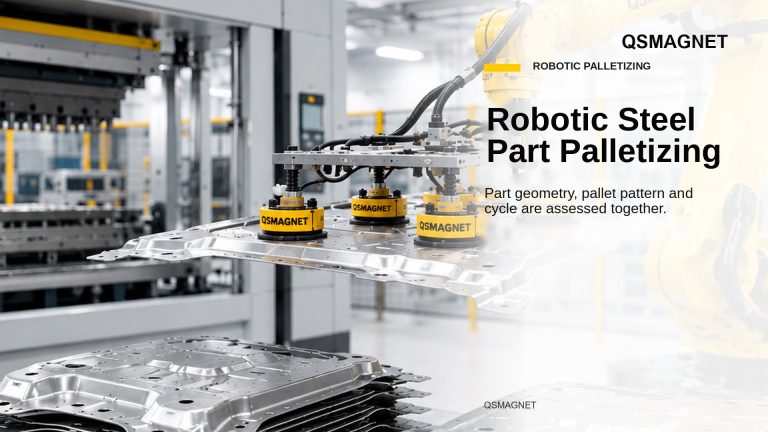
Robotic Grippers
Which Gripper Should You Choose for Robotic Steel Part Palletizing?
For robotic steel part palletizing, choose the gripper by part shape, payload, pallet pattern…
Read article